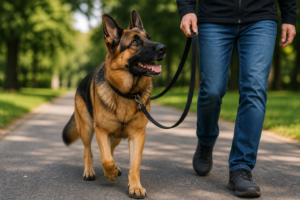

A decompression walk for dogs is a slow, sniffy walk that helps reduce stress and can ease anxiety on walks.
You go for a walk hoping your dog will come home calm…
…but instead they come back more wired — pacing, barking, zooming, or unable to settle.
If that sounds familiar, it doesn’t mean you’re doing something wrong.
It usually means your dog isn’t coming home “tired”…
they’re coming home overloaded.
A decompression walk is a gentle way to fix that — without adding more time, more training, or more pressure.
Affiliate Disclosure: Some links on this page are Amazon affiliate links. As an Amazon Associate I earn from qualifying purchases. This comes at no extra cost to you. We only recommend products we would use for our own dogs.
🤯 Why Some Walks Make Dogs More Hyper
Not all walks feel the same to a dog.
Some walks are calm and settling.
Others are like walking through a loud shopping mall:
too many smells
too many noises
too many people/dogs
too many interruptions (“leave it,” “come,” “stop,” “don’t”)
When a walk has a lot of “stuff happening,” your dog’s body may stay in high-alert mode.
And when you finally get home, that energy has to go somewhere.
🚩 Signs Your Dog Needs Decompression Walks
A decompression walk is especially helpful if your dog:
pulls harder the longer you’re out
barks or fixates on people/dogs
can’t sniff because they’re constantly scanning
gets zoomies right after getting home
struggles to settle for a long time afterward
If your dog also seems uneasy at home in general, this guide can help too:
➡️ Home & Comfort
🌱 What a Decompression Walk Actually Is
A decompression walk is not about distance.
It’s about giving your dog a chance to:
move at a comfortable pace
sniff without being rushed
make small choices (“this direction,” “that smell”)
calm their nervous system while they’re outside
Think of it like this:
A normal walk can feel like “go, go, go.”
A decompression walk feels like exhaling.
🐾 Breed, Age & Personality Matter (Quick Reality Check)
Decompression helps most dogs — but what “too much” looks like depends on the dog:
- Puppies/teens: often get overtired (zoomies can mean “needs rest,” not more exercise).
- High-drive breeds: may need decompression plus structured outlets (training/scent games).
- Reactive/anxious dogs: triggers can overload them even on “normal” walks.
- Seniors or dogs in discomfort: sudden post-walk restlessness can be a vet check moment.
Bottom line: Aim for the right walk for your dog’s brain + body today — not just a longer one.
🧭 The Simple Decompression Walk Routine
Try this 15–25 minute structure.
📍 Step 1: Pick the quietest spot you can
The location matters more than the length.
Good decompression places:
empty fields
quiet streets at off-hours
calm parks (not crowded)
wide sidewalks with space to step aside
Avoid (for decompression days):
busy sidewalks
dog parks
loud areas with constant surprises
🦮 Step 2: Use a “looser” walking setup
This is where the right gear makes things easier.
🪢 Recommended Long Training Leash (10–15 ft for decompression / longer for recall)
A long line gives your dog freedom to sniff and explore while you still stay in control — perfect for decompression walks and recall practice.
✅ Why it helps:
- 👃 More sniffing freedom (sniffing = calming work)
- 🧭 Lets your dog choose direction safely
- 🧘 Helps walks feel less “go-go-go” and more settling
⚠️ IMPORTANT SAFETY NOTES (please read):
✅ Use for supervised training only (decompression walks, recall practice, controlled exploring).
🚫 DO NOT use as a tie-out. DO NOT leave your dog unattended with a long line.
🦺 Clip the long line to a harness (not a neck collar) for safer pressure.
🧤 If your dog may lunge, wear gloves and avoid letting the line slide fast through your hands (rope-burn risk).
🌀 Avoid wrapping the line around your hand/wrist; keep it loose and managed.
🔎 Inspect the clasp + rope before each use; replace if you see fraying, damage, or weakness.
🛣️ Avoid long lines near roads, crowds, or tight spaces where tangling could happen.
👉Check the current price of the Lynxking Check Cord Dog Leash Long Lead Training Line on Amazon here.
Recommended product: Embark Adventure No-Pull Front-Clip Dog Harness
If your dog pulls on walks, a front-clip harness can make training heel and loose-leash walking much easier. The Embark Adventure No-Pull Harness has a front leash attachment (to gently discourage pulling), plus a back clip for everyday walks. It’s also padded, adjustable, and includes reflective trim for better visibility on evening walks.
Before you use it, do these quick safety checks (important):
- Measure your dog’s chest and neck and follow the size chart (size up if between sizes).
- Inspect the stitching, buckles, and D-rings as soon as it arrives.
- Test it indoors first with a few firm tugs to confirm everything feels secure.
- If your dog is an escape artist or very strong puller, consider a backup connection (a safety strap from harness to collar) for extra peace of mind.
👉Check the current price of the Embark Adventure No-Pull Dog Harness on Amazon here.
👃 Step 3: Let sniffing be the main activity
For decompression walks, your goal is not perfect walking.
Try this mindset:
If your dog is sniffing, they’re doing the work.
If your dog is calmly exploring, you’re succeeding.
A simple way to guide it:
walk a little
pause
let them investigate
repeat
🤫 Step 4: Keep your talking and cueing light
This is not the time for lots of commands.
Use only what you truly need:
safety cues
gentle direction changes
a calm “let’s go” when needed
If you want more help understanding stress signals during walks, this is a good next read:
➡️ Dog Body Language: How to Understand What Your Dog Is Really Saying
🛑 Step 5: End before your dog gets “amped up”
If your dog starts pulling harder, scanning more, or getting jumpy, that’s your sign to wrap it up.
Decompression is about leaving your dog thinking:
“That felt safe.”
🛬 The 5-Minute “Landing Routine” After You Get Home
This part is simple but powerful.
Right after a decompression walk:
water
a short calm break (no intense play)
an easy chew or enrichment item
This helps your dog transition from “outside mode” to “rest mode.”
Recommended Snuffle Mat: YOPSI Snuffle Mat for Dogs (Large Breed, 39.4” x 23.6”)
Best for indoor enrichment & slow feeding. Snuffle mats tap into your dog’s natural “search and sniff” instincts, which can be incredibly calming and mentally tiring (in a good way). This extra-large YOPSI snuffle mat is a soft, fleece-style foraging mat with multiple textures and hiding areas, making it a great option for boredom busting, rainy-day enrichment, and slowing down fast eaters. The larger size is especially helpful for medium-to-large dogs who need more space to forage.
How to use it: Sprinkle kibble or small treats throughout the mat, start easy, and gradually hide food deeper as your dog gets the idea. Most dogs get a solid 10–15 minutes of mental work from a session.
Safety & supervision (read this):
- Supervise every session. Several low-star reviews mention dogs ripping/shredding the mat when left alone or when they treat it like a chew toy.
- Not for power chewers or shredders. If your dog destroys plush toys, this type of mat may not last — choose a more heavy-duty enrichment option instead.
- Pick it up when the food is gone. Don’t leave it on the floor as a free-access toy.
- Check it before each use. If you see loose threads, torn fleece, or exposed seams, stop using it (loose pieces can be swallowed).
- Use on a stable surface. Some dogs may flip or bunch snuffle mats while foraging. If needed, place it on a non-slip rug/mat or hold an edge briefly while they learn.
- Portion control: If using for meals, measure the kibble first so you’re not accidentally overfeeding.
- Wash & dry thoroughly. It’s machine washable, make sure it dries completely between uses to avoid odor/mildew (especially if using wet treats).
👉 🛒 Check the current price of the YOPSI Large Snuffle Mat on Amazon here.
⏱️ If You Only Have Time for One Thing, Do This
Do a 10-minute sniff loop near your home, but choose the quietest path you can.
Even a short calm walk can feel better than a long chaotic one.
⚠️ Common Mistakes That Cancel the Benefits
🏃♂️ 1) Turning it into exercise training
Decompression walks aren’t about “burning energy.”
They’re about calming the system that creates the frantic energy.
🕒 2) Picking the busiest time of day
If the environment is stressful, your dog can’t fully relax.
🔥 3) Trying to “push through” reactivity
If your dog is constantly triggered, they don’t get relief — they get more stacked stress.
For dogs with bigger behavior challenges, this guide helps connect the dots:
➡️How to Stop Common Puppy Behaviors: Biting, Chewing, Jumping & More
🆘 When to Get Extra Help
If your dog:
panics on walks
tries to escape the harness
shows intense fear or aggression
won’t take treats outside at all
It’s worth talking with a qualified trainer or behavior professional (and your vet if needed). Some dogs need a more customized plan — and that’s okay.
⭐ Final Thoughts
If walks make your dog more hyper, it’s not because you “didn’t walk far enough.”
It’s usually because the walk was too intense for their nervous system, even if it looked normal on the outside.
A decompression walk gives your dog a calmer way to experience the world — and helps them come home more settled, more comfortable, and easier to live with day to day.
The Dog Care Hub Editorial Team
The Dog Care Hub Editorial Team is a group of passionate dog lovers focused on making everyday dog care simple and beginner-friendly. We combine real-life experience with information from trusted veterinary sources to create clear, gentle guidance for new and experienced dog owners. Every article is reviewed for accuracy, safety, and ease of understanding so you can feel more confident caring for your dog.
🎁 Want the Calm Start Starter Pack (Free PDF)?
Get the free download in one click.
👉 Want to support the site? Shop our Dog Care Hub merch (hoodies, mugs, and more).