
Fleas and ticks are two of the most common — and preventable — problems dog owners face. Yet many owners only act after spotting a problem, when prevention is far easier, cheaper, and kinder to your dog than treating a full infestation.
This guide walks you through everything a beginner needs to know: what fleas and ticks actually are, why they’re dangerous, how to choose the right prevention for your dog, and what to do if you find one.
Affiliate Disclosure: Some links on this page are Amazon affiliate links. As an Amazon Associate, we earn from qualifying purchases. This comes at no extra cost to you. We only recommend products we would use for our own dogs.
🦟 What Are Fleas — and Why Are They Such a Problem?
Fleas are tiny, fast-moving parasites that feed on your dog’s blood. They’re barely visible to the naked eye, but the problems they cause are far from small.
A single female flea can lay up to 50 eggs per day. Those eggs fall off your dog and into your carpet, furniture, and bedding — which means a flea problem on your dog quickly becomes a flea problem in your home.
What fleas can cause:
- Intense itching and scratching
- Flea Allergy Dermatitis (FAD) — a very common skin reaction to flea saliva
- Hair loss from repeated scratching
- Tapeworm infection (when a dog swallows an infected flea while grooming)
- Anemia in puppies or small dogs with heavy infestations
The key thing to understand about fleas:
Only about 5% of a flea infestation lives on your dog at any one time. The other 95% — eggs, larvae, and pupae — are in your home environment. This is why treating your dog alone often isn’t enough, and why prevention is so much easier than dealing with an infestation.
🕷️ What Are Ticks — and Why Do They Matter?
Ticks are small, spider-like parasites that attach to your dog’s skin and feed on blood. Unlike fleas, ticks don’t move around — they burrow in and stay in one spot, sometimes for days, while feeding.
Common tick species that affect dogs in the US:
- Black-legged tick (deer tick) — transmits Lyme disease
- American dog tick — transmits Rocky Mountain spotted fever
- Lone Star tick — transmits ehrlichiosis and other infections
- Brown dog tick — common indoors and in kennels
Diseases ticks can transmit to dogs:
- Lyme disease — causes lameness, fever, and joint swelling
- Rocky Mountain spotted fever — can be life-threatening if untreated
- Ehrlichiosis — causes fever, loss of appetite, and lethargy
- Anaplasmosis — similar symptoms to Lyme disease
Ticks need to be attached for 24–48 hours to transmit most diseases, which is why checking your dog after every outdoor trip in wooded or grassy areas can genuinely save their health.
📅 When Is Flea & Tick Season?
Fleas are most active when temperatures are between 65–80°F and humidity is high — typically spring through fall. However, in warmer parts of the US, fleas can remain active year-round, and they can survive indoors all winter even in cold climates.
Ticks are also most active in spring through fall, but the black-legged tick (deer tick) can remain active in temperatures above 35°F, meaning tick risk extends well into winter in many regions.
Bottom line: Most vets recommend year-round prevention, especially for dogs that spend time outdoors, in parks, or in wooded areas.
🛡️ Types of Flea & Tick Prevention (What’s Available)
There are several approaches to prevention, and each has its place. Understanding the difference helps you make the right choice for your dog.
1. 🟡 Flea & Tick Collars
Collars release active ingredients slowly over several months, creating a long-lasting barrier on your dog’s coat and skin. They’re convenient because you don’t have to remember monthly applications — but they must fit properly and stay dry to work.
Some collar products have generated significant consumer concern and regulatory scrutiny regarding adverse reactions in dogs. For this reason, we strongly recommend consulting your veterinarian before choosing a flea collar, rather than purchasing one over the counter. Your vet can recommend a collar that has been properly vetted for safety and is appropriate for your dog’s specific size, age, and health history.
2. 💧 Topical Spot-On Treatments
Applied directly to the skin at the back of the neck once a month, spot-on treatments spread through the skin’s natural oils to cover the whole body. They’re one of the most widely used prevention methods.
Best for: monthly routine protection, especially for dogs in high-risk areas.
3. 💊 Oral Treatments
Oral flea and tick prevention (chewable tablets or pills) works from the inside out — the active ingredient enters the bloodstream and kills parasites when they bite. Prescription options like NexGard, Bravecto, and Simparica are among the most effective available and require a vet visit. Some fast-acting oral tablets are available over the counter for immediate flea relief.
Best for: dogs who swim frequently (water doesn’t affect oral treatments) or dogs who react to topical products.
4. 🌿 Natural Sprays
Plant-based sprays use essential oils like cedarwood, peppermint, or rosemary to repel fleas and ticks. They are generally considered a lower-risk option compared to chemical treatments — however, effectiveness varies significantly from dog to dog, and natural does not automatically mean safe. Some dogs can react to essential oils, particularly peppermint, with skin irritation or discomfort.
If you prefer a more natural approach, we recommend focusing on consistent grooming habits, regular washing of bedding, and yard maintenance rather than relying on a spray product alone.
Best for: owners who want to reduce chemical exposure and are already using a vet-recommended primary treatment — not as a standalone solution.
5. 🪮 Flea Combs
A fine-toothed flea comb is a simple, chemical-free tool for checking and manually removing fleas and flea dirt from your dog’s coat. It doesn’t prevent fleas on its own, but it’s an excellent monitoring tool.
Best for: spotting early signs of fleas before an infestation takes hold.
🛒 Recommended Products
⚠️ We encourage you to research each product thoroughly and speak with your veterinarian before purchasing any flea and tick treatment. Your vet knows your dog’s individual health history and is the best person to guide your choice.
🟡 Flea & Tick Collars — What You Should Know
Flea and tick collars are a popular prevention option because they offer long-lasting protection without monthly reapplication. They work by releasing active ingredients slowly over several months, creating a continuous barrier on your dog’s coat and skin.
How they generally work:
- Active ingredients spread through the coat from the point of contact
- Most collars are designed to last several months
- Many are water-resistant and odorless
- No prescription required for most OTC options
However, before choosing any flea collar, we strongly encourage you to:
- Speak with your veterinarian first. Flea collars contain pesticide ingredients that can affect dogs differently depending on their age, size, breed, and health history.
- Research the specific product thoroughly, including reading independent reviews and checking for any reported adverse events with the EPA or NPIC (National Pesticide Information Center).
- Monitor your dog closely if you do use a collar — remove it immediately and contact your vet if you notice any behavioral changes, lethargy, loss of coordination, skin irritation, or other unusual symptoms.
- Never use a dog flea collar on cats — many formulas are highly toxic to cats.
⚠️ Some flea collar products have generated significant consumer concern and regulatory scrutiny regarding adverse reactions. We have chosen not to link to specific collar products in this guide. Your veterinarian is the best resource for a collar recommendation that is appropriate and safe for your individual dog.
💧 Recommended Topical Treatment: Frontline Plus Flea and Tick Treatment for Dogs
Frontline Plus is one of the most well-established monthly topical flea and tick treatments available without a prescription. It uses two active ingredients — fipronil, which kills adult fleas and ticks, and (S)-methoprene, which targets flea eggs and larvae — making it effective against all stages of the flea life cycle, not just adult fleas. It’s applied once a month to the skin at the base of the neck.
It’s available in different sizes based on your dog’s weight, so make sure you select the correct size for your dog.
Why it’s a trusted option:
- Kills adult fleas, flea eggs, and flea larvae — breaking the flea life cycle
- Kills ticks including deer ticks (which carry Lyme disease), American dog ticks, and brown dog ticks
- Waterproof after 24 hours — stays effective after bathing or swimming
- Applied just once a month — simple to fit into a regular routine
- Available without a prescription and widely reviewed
Important safety notes (please read):
- Choose the correct weight range for your dog. Using the wrong size — especially a larger dose on a smaller dog — can cause adverse effects.
- Keep away from children during application and until the product is fully dry.
- Do not apply to broken, irritated, or inflamed skin.
- Do not let your dog swim or bathe for at least 24 hours after application.
- If your dog shows unusual behavior, skin reactions, lethargy, or digestive upset after application, contact your vet.
- Store in a cool, dry place away from food and out of reach of children.
- If you have cats, be aware that many flea products safe for dogs are toxic to cats. Always check labels and keep treated dogs away from cats until the product is fully dry.
⚠️ Important: Buy from Amazon directly, not third-party sellers.
Frontline Plus is one of the most counterfeited flea treatments on Amazon. Fake versions have been confirmed to be ineffective and potentially harmful. To make sure you’re getting the genuine product, only purchase from Amazon.com as the seller — not from a third-party storefront listed on Amazon’s marketplace. You can verify the seller before checkout on the product page.
If you receive a package that looks different than usual, smells off, or seems to have unusual packaging, do not use it and contact Amazon for a refund.
Small Dogs (5–22 lbs): 👉Check the current price of Frontline Plus for Small Dogs on Amazon here.
Medium Dogs (23–44 lbs): 👉Check the current price of Frontline Plus for Medium Dogs on Amazon here.
Large Dogs (45–88 lbs): 👉Check the current price of Frontline Plus for Large Dogs on Amazon here.
💊 What About Oral Flea Treatments?
Oral flea treatments are fast-acting and effective — but the safest options in this category require a veterinarian prescription. Brands like NexGard, Bravecto, and Simparica are widely recommended by vets and are not available over the counter.
If you’re interested in an oral flea treatment for your dog, we strongly recommend speaking with your vet directly. They can prescribe the right product based on your dog’s weight, breed, age, and health history.
⚠️ We have chosen not to link to over-the-counter oral flea tablets in this guide due to concerns raised in customer reviews about adverse reactions in some dogs.
🌿 Natural Flea & Tick Prevention: What Actually Helps
If you prefer to avoid chemical-based treatments, there are several natural approaches that can help reduce flea and tick exposure — though it’s important to understand that no natural method alone provides the same level of protection as veterinary-grade prevention.
That said, these habits are genuinely useful as part of a broader prevention routine:
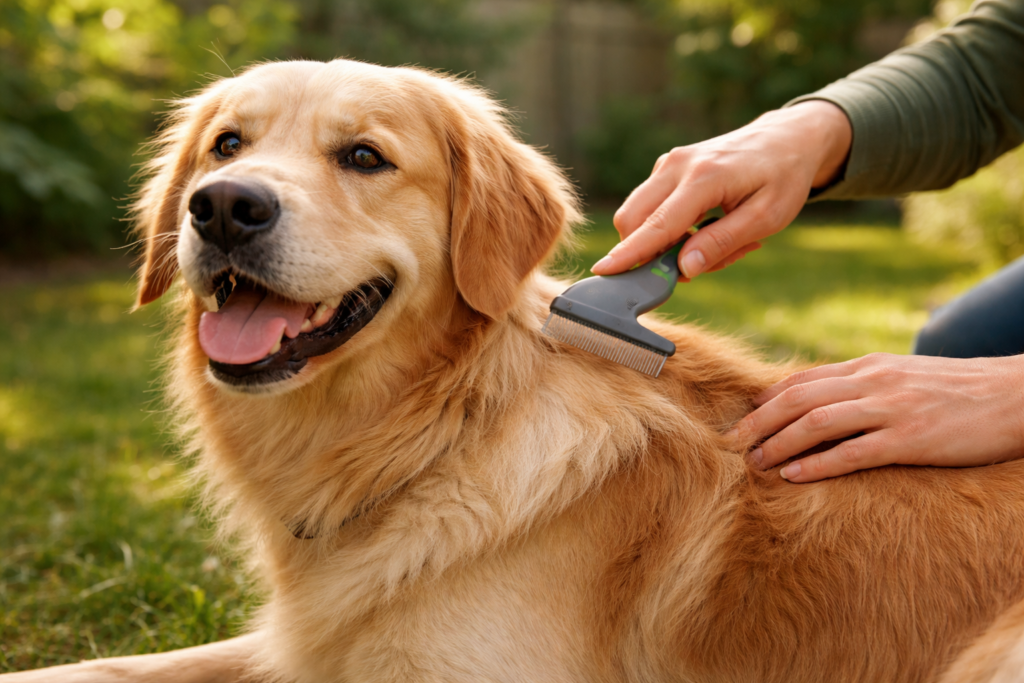
Regular combing: Using a fine-toothed flea comb after walks or outdoor time is one of the most effective natural methods. It catches fleas and flea dirt before they have a chance to multiply. (See our flea comb recommendation below.)
Washing bedding frequently: Flea eggs and larvae live in fabric. Washing your dog’s bedding weekly in hot water breaks the flea life cycle significantly.
Yard maintenance: Keeping grass short and removing leaf piles reduces the tick and flea habitat immediately around your home.
Diatomaceous earth (food grade): Some owners use food-grade diatomaceous earth on carpets and bedding as a non-toxic flea deterrent. It works by damaging the exoskeleton of insects. Always use food-grade only, apply lightly, and avoid areas where your dog breathes it in directly.
⚠️ We have chosen not to link to essential oil-based flea sprays in this guide. While some natural sprays are popular, review patterns suggest inconsistent effectiveness and some dogs — particularly those with sensitive skin — can react to ingredients like peppermint oil. When in doubt, ask your vet before applying any new product to your dog’s coat.
🪮 Recommended Flea Comb: Coastal Pet Safari Double Row Comb
A flea comb is one of the simplest, most chemical-free tools you can use to check your dog for fleas. The fine, closely-spaced stainless steel teeth are designed to catch adult fleas and flea dirt (the dark brown specks that are actually flea feces) as you comb through the coat. It’s not a prevention tool on its own, but it’s excellent for catching a problem early — before it becomes a full infestation.
Why it’s a useful addition to your routine:
- Fine stainless steel teeth designed to catch fleas and flea dirt
- Comfortable, lightweight handle
- Works on short and medium coats (a good first check tool for any dog)
- Chemical-free — no products needed, safe for puppies
- Simple to clean: dip in a bowl of soapy water between passes to trap any fleas
How to use it:
- Set up a bowl of hot, soapy water nearby.
- Comb slowly through your dog’s coat, section by section.
- After each pass, check the comb for adult fleas or dark specks (flea dirt).
- Dip the comb in the soapy water to trap and kill anything caught.
- Pay extra attention to the base of the tail, groin, belly, and armpits — fleas favor warm, hidden areas.
To confirm if specks are flea dirt: Place them on a damp white paper towel. If they turn reddish-brown, it’s flea dirt (digested blood), which confirms flea activity.
Important technique: dip the comb in a bowl of hot soapy water after every single pass — this traps and kills fleas before they can escape between the double rows
👉Check the current price of the Coastal Pet Safari Double Row Comb on Amazon here.
🕷️ How to Safely Remove a Tick
Finding a tick on your dog is stressful, but removal is straightforward if you follow the right steps. The goal is to remove the tick as quickly and cleanly as possible without leaving the head embedded in the skin.
🔧 Recommended Tick Removal Tools
Finding a tick on your dog is stressful — but having the right tool makes removal safer and faster. The key is to remove the tick whole, without squeezing its body, which reduces the risk of disease transmission. We recommend keeping a dedicated tick removal tool in your first aid kit, especially during peak tick season.
🥇 Budget Pick: TickCheck Tick Remover Value 3 Pack
This set includes three hook sizes designed to safely remove ticks of different sizes — from tiny nymphs to fully embedded adult ticks. The hook design slides under the tick and lifts it out cleanly without squeezing the body, which is important for reducing the risk of Lyme disease transmission. It also comes with a free tick identification card so you can identify the type of tick you removed — useful information to share with your vet.
Why it’s a useful addition to your kit:
- Three hook sizes handle all tick sizes — nymphs to adults
- Hook design removes the tick whole without squeezing
- Includes a tick species identification card
- Comes in a resealable pouch — easy to store in a first aid kit or take on walks
- Chemical-free and reusable
How to use it:
- Stay calm and part your dog’s fur to clearly expose the tick
- Choose the smallest hook that fits under the tick’s body
- Slide the hook under the tick as close to the skin as possible
- Lift slowly and steadily — do not twist or jerk
- Drop the tick into a small container of rubbing alcohol to kill it
- Clean the bite area with antiseptic and wash your hands
- Monitor the area for the next few days and contact your vet if you notice swelling, redness, or changes in your dog’s behavior
⚠️ Never use petroleum jelly, heat, or your fingers to remove a tick — these methods can cause the tick to release more saliva into the bite.
👉 Check the current price of the TickCheck Tick Remover Value 3 Pack on Amazon here.
🥈 Premium Pick: TickCheck Premium Tick Remover Kit
For owners who want a more complete and durable solution, the TickCheck Premium Kit is the #1 Best Seller in Dog Tick Remover Tools on Amazon. It includes a stainless steel tick remover for larger embedded ticks, a super fine-tip tweezer specifically designed for removing nymph ticks and small deer ticks, a leatherette carrying case, and a pocket tick identification card. The stainless steel construction means it’s built to last and easy to sanitize between uses.
Why it’s worth the upgrade:
- Stainless steel — more durable and easier to sanitize than plastic tools
- Two-tool system covers both large embedded ticks and tiny nymph ticks
- Leatherette case keeps everything together in your first aid kit
- Includes tick ID card — helpful for vet visits after a bite
- #1 Best Seller in Dog Tick Remover Tools on Amazon
- 4.7 stars across 8,261+ reviews
👉 Check the current price of the TickCheck Premium Tick Remover Kit on Amazon here.
🏠 What to Do If Your Home Has Fleas
If your dog has fleas, your home almost certainly does too. Here’s a simple action plan:
Step 1: Treat your dog immediately.
Step 2: Wash all bedding. Wash your dog’s bed, your own bedding, and any fabric they sleep on in hot water (at least 140°F). Dry on high heat.
Step 3: Vacuum thoroughly and often. Vacuum carpets, rugs, furniture, and along baseboards daily for at least two weeks. The vibration can stimulate flea pupae to hatch, making them easier to eliminate. Dispose of the vacuum bag or empty the canister outside immediately after each use.
Step 4: Treat your home environment. A home flea spray can help reach soft surfaces your vacuum can’t fully treat. Focus on areas where your dog rests most.
Step 5: Be patient. Flea pupae can be resistant to treatments for several weeks. Most infestations require consistent effort over 2–4 weeks to fully resolve. If the infestation is severe, a pest control professional may be needed.
🌲 Tick Prevention Tips for Dog Walks
A few simple habits can reduce your dog’s tick exposure significantly:
- Stick to the center of trails when walking in wooded or grassy areas — ticks wait on the edges of vegetation, not in the open
- Do a full tick check after every walk in high-risk areas — run your fingers through your dog’s entire coat, paying close attention to ears, between toes, around the tail, under the collar, and in the groin area
- Keep your own yard tidy — mow grass regularly, clear leaf litter, and create a wood chip or gravel barrier between lawn and wooded areas to reduce tick habitat
- Check yourself too — ticks don’t distinguish between dog and human
❓ Flea & Tick Prevention FAQs
How do I know if my dog has fleas?
The most common signs are persistent scratching (especially around the base of the tail, groin, and neck), small red or irritated patches of skin, and tiny dark specks in the coat (flea dirt). You might also spot fleas moving quickly through the fur — they’re small and dark, about the size of a sesame seed. Use a flea comb over a white surface to check more easily.
Can indoor dogs get fleas and ticks?
Yes. Fleas can enter your home on clothing, shoes, or other pets. Ticks can be carried inside the same way. Even dogs who rarely go outside are not fully protected without prevention.
How often should I apply flea and tick prevention?
Most topical spot-on treatments are applied monthly. Flea and tick collars last up to 8 months. Oral prescription treatments vary from monthly to every 3 months depending on the product. Always follow the schedule recommended on the product label or by your vet.
Can I use multiple flea products at the same time?
Generally, no — combining products without veterinary guidance can lead to overdosing and adverse reactions. Always check with your vet before using more than one treatment simultaneously.
Are natural flea products as effective as chemical ones?
Plant-based options can help repel fleas and ticks but are generally considered less reliable than veterinary-grade treatments for full prevention — especially in high-risk areas or during peak season. They can be a useful supplement or a preference choice, but dogs in tick-endemic areas may need more robust protection.
What’s the difference between OTC and prescription flea treatments?
Over-the-counter products (like Frontline Plus) are available without a vet visit. Prescription products (like NexGard, Bravecto, and Simparica) require a vet prescription but are often considered more effective — especially for tick prevention. If you live in an area with high tick populations or your dog has had tick-borne illness before, it’s worth asking your vet about prescription options.
Is it safe to use dog flea products if I have cats?
This is a critical safety point: many flea and tick products safe for dogs are highly toxic to cats — particularly those containing permethrin or pyrethrin. Always check the label before using any product in a home with cats, and keep treated dogs away from cats until the product is fully dry. When in doubt, ask your vet.
❤️ Final Thoughts
Flea and tick prevention is one of the simplest things you can do to protect your dog’s health and comfort — but it requires consistency to work. The best prevention is the one you actually use regularly, fits your dog’s lifestyle, and that you’ve discussed with your vet if you have any questions about their specific needs.
A protected dog is a more comfortable, healthier, and happier companion. Starting a routine now — before you see a single flea or tick — is always the right call. 🐾
Ready to build a complete health routine for your dog? These guides pair well with this one:
- How Much Should I Feed My Dog? — because a healthy diet supports a stronger immune system
- Essential Grooming Basics Every Dog Owner Should Know — regular grooming sessions are a great time to check for fleas and ticks
- Dog Body Language: How to Understand What Your Dog Is Really Saying — recognizing itching, discomfort, or unusual behavior early helps you spot problems fast
The Dog Care Hub Editorial Team
The Dog Care Hub Editorial Team is a group of passionate dog lovers focused on making everyday dog care simple and beginner-friendly. We combine real-life experience with information from trusted veterinary sources to create clear, gentle guidance for new and experienced dog owners. Every article is reviewed for accuracy, safety, and ease of understanding so you can feel more confident caring for your dog.
🎁 Want the Calm Start Starter Pack (Free PDF)?
Get the free download in one click.
👉 Want to support the site? Shop our Dog Care Hub merch (hoodies, mugs, and more).