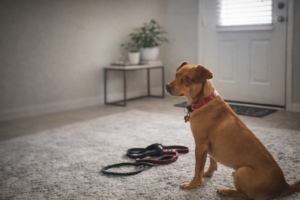

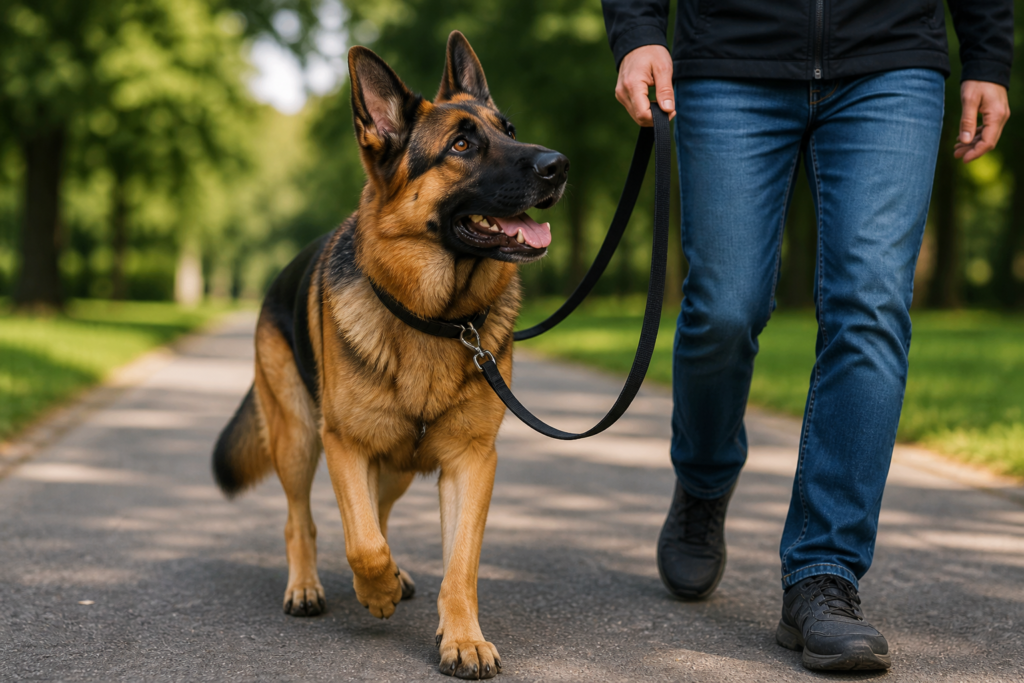
If walking your dog feels more like being dragged through the neighborhood than an enjoyable stroll, you’re not alone. Pulling on the leash is one of the most common complaints from dog owners — and one of the most fixable.
The good news: leash training doesn’t require fancy equipment or hours of daily practice. With the right technique and a little consistency, most dogs — puppies and adults — can learn to walk politely beside you. This guide walks you through everything you need to know. 🐾
Affiliate Disclosure: Some links on this page are Amazon affiliate links. As an Amazon Associate, we earn from qualifying purchases. This comes at no extra cost to you. We only recommend products we would use for our own dogs.
🤔 Why Do Dogs Pull on the Leash?
Before we fix the problem, let’s understand it. Dogs pull because:
- ✅ The world is exciting and they want to GET THERE FASTER.
- ✅ Pulling has always worked (if pulling = moving forward, they keep doing it).
- ✅ No one ever taught them that walking calmly beside you is the better option.
This is important: your dog isn’t being stubborn or dominant. They just haven’t learned the rules yet. That’s where you come in. 🙂
🛒 What You Need Before You Start
The Right Equipment
You don’t need expensive gear — but what you use matters.
✅ Best for most beginners: a flat collar or standard harness
For most puppies and dogs just starting out, a simple flat collar or a back-clip harness works well. The goal isn’t to use equipment to stop pulling — it’s to teach your dog not to pull in the first place.
What to avoid when starting out:
- ❌ Retractable leashes — they teach dogs to pull (there’s always more leash if they tug).
- ❌ Prong collars or choke chains — not necessary and can cause pain or anxiety.
- ❌ Back-clip harnesses can sometimes encourage pulling in strong pullers.
A 4–6 foot standard leash is ideal. It gives you control without feeling too restrictive for either of you.
🦺 If your dog is already a strong puller: a front-clip harness (the leash attaches at the chest) can help redirect them gently without discomfort. It’s one of the most trainer-recommended tools for leash pullers — we cover our top pick in the gear section below.
Treats: Your Secret Weapon 🧡
Use small, soft, high-value treats — something your dog goes absolutely wild for. Save these treats just for leash training so they stay special and motivating.
📍 The Golden Rule of Leash Training
Here’s the one rule that makes everything work:
🚶 Moving forward = reward. Pulling = walk stops.
Every time your dog pulls and you keep moving, you teach them that pulling works. Every time you stop — and only move again when the leash is loose — you teach them that calm walking is the only way to go anywhere.
It sounds simple. And it is — but it takes consistency. Every. Single. Walk.
🗓️ How to Leash Train Your Dog: A Simple Step-by-Step Plan
Days 1–2: 🏠 Start Indoors (or in the Yard)
Before you hit the sidewalk, practice in a low-distraction environment.
- Put on the leash and hold a treat at your hip — the side you want your dog to walk on.
- Take a step. If your dog stays beside you — treat + praise. ✅
- If they pull ahead, stop immediately. Don’t move. Don’t say anything.
- Wait for them to look back at you or step back toward you.
- The moment the leash goes loose — treat + move forward again. ✅
💡 Tip: Keep sessions short — 5 to 10 minutes max. You want your dog engaged and successful, not bored or frustrated. 🙂
Days 3–5: 🚪 Move Outside (Low-Distraction Area)
Now take it outside — but start somewhere quiet. Your driveway, backyard, or a calm side street is perfect.
- Use the same approach: treat at your hip, stop the moment they pull.
- Reward frequently for staying beside you. In early sessions, reward every few steps.
- If they get distracted and lunge: stop, wait, then gently call their name to get focus back.
Don’t rush this step. The goal isn’t distance — it’s your dog learning that walking beside you is the best deal around.
Not sure if your dog understands basic cues yet? Check out: Basic Commands for Dogs: Training Commands Every Dog Should Learn — including a quick overview of the Heel command and our top harness and leash picks already covered there. 👈
Days 6–10: 🌳 Practice in Busier Environments
Now you’re ready for the real world — more smells, more distractions, more excitement.
- Increase distance gradually. Don’t jump straight to the busiest street in your neighborhood.
- Keep rewarding check-ins (when your dog looks up at you while walking — treat that immediately 🎯).
- If a big distraction causes major pulling (a squirrel, another dog), turn and walk the opposite direction calmly.
🔄 The direction change trick: If your dog surges forward, simply turn around and walk the other way — no yanking, no scolding. Do this consistently and they’ll start watching YOU instead of everything else.
🎯 The “Check-In” — Your Most Powerful Leash Tool
A check-in is when your dog voluntarily looks up at your face while walking. This is gold. 🧡
Every time your dog does this, reward it immediately. This builds a habit of your dog checking in with you during walks — and a dog that checks in regularly almost never pulls.
How to practice it:
- Walk normally.
- The moment your dog looks up at you — mark it with “yes!” and give a treat.
- Repeat dozens of times in your early sessions.
Over time, your dog starts choosing to look at you rather than drag you forward. It’s one of the simplest and most effective habits in leash training.
⚠️ Common Leash Training Mistakes (and How to Fix Them)
1) ❌ Moving Forward While Your Dog Pulls
This is the #1 reason leash training fails. Every step you take while they’re pulling undoes the lesson.
✅ Fix: Stop the moment the leash tightens. Wait. Move only when it goes slack.
2) ❌ Inconsistent Rules
One walk you stop when they pull. The next walk (you’re tired, you’re in a hurry) you just let it go. Dogs learn from patterns — inconsistency is confusing.
✅ Fix: Commit to the same rule on every walk, even short ones. If you don’t have time to train properly, do a short yard session instead.
3) ❌ Only Practicing on “Real” Walks
If your dog only practices loose-leash walking once a day, progress will be slow.
✅ Fix: Practice in the yard, up the driveway, even indoors with the leash on. More reps = faster learning.
4) ❌ Holding the Leash Too Tight
A tense leash creates a tense dog. If you’re always gripping hard, your dog feels that pressure and mirrors it back.
✅ Fix: Hold with a relaxed grip. Let the leash hang in a loose J-shape. Only firm up when truly needed.
5) ❌ Scolding or Yanking for Pulling
Yanking, jerking, or scolding creates frustration and anxiety — neither of which helps a dog learn to walk calmly.
✅ Fix: Stay calm, stop walking, redirect. The absence of forward movement is enough of a consequence.
🦺 Leash Training Gear (Our Picks for This Guide)
Note: For our full breakdown of harnesses and leashes — including safety tips and sizing guidance — check out: Basic Commands for Dogs. Below are our picks specifically suited for dogs that are just starting leash training from scratch.
✅ Recommended Starter Harness: PetSafe Easy Walk Dog Harness
PetSafe Easy Walk No-Pull Dog Harness (front-clip) — gentle, beginner-friendly support for dogs learning leash manners
If your dog pulls on walks, the PetSafe Easy Walk is a simple starter harness that can make training feel easier right away. It uses a front leash attachment that helps guide your dog back toward you when they surge forward—so you’re not fighting the leash or putting pressure on the neck.
It’s not a “magic fix,” but it can be a really helpful training tool while you practice loose-leash walking.
✅ Why we like it for beginners:
- Front-clip design helps reduce pulling without harsh corrections
- Lightweight, simple straps (easy to put on once you learn the fit)
- Helps protect the neck compared to collars when a dog lunges
- Encourages better walking position so your dog stays closer to your side
- Multiple sizes and colors so most dogs can get a good match
⚠️ Good to know (fit + comfort matters):
- Measure before buying (this harness works best when sizing is accurate)
- For comfort, the straps should sit behind the front legs, not rubbing the armpits
- Snug but not tight: you should be able to slide two fingers under the straps
- If your dog has a deep chest, sensitive skin, or tends to “back out” of harnesses, consider a padded harness or a more secure style
- Always double-check buckles and strap placement before each walk—especially with strong pullers
👉 Check the current price of the PetSafe Easy Walk Harness on Amazon here.
✅ Recommended Training Leash: Joytale Reflective Dog Leash (6 ft)
Joytale Dog Leash — 6 ft Standard, double-sided reflective stitching, padded handle (Color: Black)
For teaching loose-leash walking, you want a leash that’s simple and predictable. This Joytale 6-foot leash gives you enough length for comfortable walking and training cues, but not so much slack that your dog can rehearse pulling. The padded handle is a nice bonus during the early “stop-and-go” stage, and the reflective stitching helps you stay visible on morning or evening walks.
✅ Why we like it for training:
- Classic 6-foot length — ideal for loose-leash practice without extra tangling
- Comfortable padded handle — easier on your hands during longer sessions
- Double-sided reflective stitching — helpful for low-light visibility
- Simple, no-nonsense design — keeps training signals clear and consistent
- Works well with front-clip harnesses (like the Easy Walk) for beginners
⚠️ Good to know:
- Not chew-proof — don’t leave it within reach if your dog bites/chews leashes
- Do a quick safety check before walks: clip closes fully + stitching looks solid
- If your dog is a powerful puller or you want extra peace of mind, consider a leash with a locking carabiner-style clip instead
- Replace the leash if you notice fraying, loose stitching, or a sticky clip
👉 Check the current price of the Joytale Reflective Dog Leash on Amazon here.
❓ Leash Training FAQs
How long does it take to leash train a dog?
Most dogs show real improvement within 1–2 weeks of consistent daily practice. Full loose-leash walking habits usually take a few weeks to a couple of months. Puppies often pick it up faster than adult dogs who’ve been pulling for years — but both can absolutely get there.
My adult dog has been pulling for years. Is it too late?
Not at all. Adult dogs can absolutely learn to walk politely — it just takes a little more patience since you’re replacing a long-established habit. The same techniques work for adults as they do for puppies. Stick with it. 🙂
Should I use a choke chain or prong collar to stop pulling?
We don’t recommend them, especially for beginners. These tools can cause pain, fear, and anxiety — and they don’t teach your dog why to stop pulling. A front-clip harness paired with consistent positive reinforcement is safer and more effective long-term.
What if my dog sits down and refuses to walk?
This is different from pulling — it usually means your dog is nervous, overwhelmed, or cautious. Don’t drag them forward. Crouch down, speak softly, use treats to lure a few steps, and keep early walks short and calm. For nervous dogs, also check out: Dog Anxiety & Calming: Signs, Triggers & What Actually Helps.
Can I train with distractions right away?
Start without them. The goal in early training is to get the behavior right in easy conditions first, then layer in distractions gradually. Trying to train near a busy park on day one usually leads to frustration for both of you.
My dog walks great alone but pulls when they see other dogs. Help!
Super common. The fix: work at a distance where your dog can still focus, reward heavily for check-ins near the distraction, and close the gap slowly over many sessions. For reading your dog’s stress signals during those moments: Dog Body Language: How to Understand What Your Dog Is Really Saying.
What’s the difference between this post and the Heel section in your Basic Commands guide?
Great question! Our Basic Commands guide gives you a quick intro to the Heel command alongside 9 other essential commands. This post goes much deeper — a full step-by-step training plan, troubleshooting common problems, and gear picks specifically for dogs starting from scratch. Think of that post as the overview, and this one as the deep dive. 🐾
⭐ Final Thoughts
Leash pulling is frustrating — but it’s also one of the most trainable problems your dog will ever have.
The secret isn’t the gear or a magic trick. It’s the rule: loose leash = we move. Tight leash = we stop.
If you stick to that rule on every single walk, your dog will figure it out. Give it a few weeks of consistent practice, reward the good moments generously, and celebrate the small wins — like three whole steps without pulling. 🐾
You’ve got this. 🧡
🐶 The Dog Care Hub Editorial Team
The Dog Care Hub Editorial Team is a group of passionate dog lovers focused on making everyday dog care simple and beginner-friendly. We combine real-life experience with information from trusted veterinary sources to create clear, gentle guidance for new and experienced dog owners. Every article is reviewed for accuracy, safety, and ease of understanding so you can feel more confident caring for your dog.
🎁 Want the Calm Start Starter Pack (Free PDF)?
Get the free download in one click.
👉 Want to support the site? Shop our Dog Care Hub merch (hoodies, mugs, and more).