
Crate training can sound harsh at first, especially if you picture a dog “locked up” and upset.
But when it’s done gently, a crate becomes something very different:
- A cozy “bedroom” where your dog can relax
- A safe place to rest when you can’t supervise
- A tool that makes potty training and alone-time much easier
This guide walks you through kind, step-by-step crate training — with no yelling, no forced confinement, and no shame if things feel messy at first. You’ll learn how to set things up, how to introduce the crate, and what to do if your dog cries or resists.
Affiliate Disclosure: Some links on this page are Amazon affiliate links. As an Amazon Associate I earn from qualifying purchases. This comes at no extra cost to you. We only recommend products we would use for our own dogs.
🧩 What Crate Training Really Is (and Isn’t)
Before diving into steps, it helps to get clear on the goal.
Crate training is:
- Teaching your dog that the crate = predictable, safe, and comfortable
- Giving them a place where they can switch off and rest
- Helping you manage potty training, chewing, and alone time more easily
Crate training is not:
- A punishment for “bad” behavior
- A place to shut your dog away for long hours every day
- A quick fix for separation anxiety or big behavior problems
Think of the crate like a bedroom with a door, not a jail cell. Your dog should feel they can truly relax there, not worry about what will happen next.
f your dog already struggles with being left alone, pair this guide with your separation anxiety plan rather than relying on the crate alone.
🧺 Step 1: Choose the Right Crate Setup
A good setup does half the work for you. You don’t need anything fancy, just something that feels secure, cozy, and boring in a good way.
📏 Pick the right size
Your dog should be able to:
- Stand up comfortably
- Turn around
- Lie stretched out on their side
If the crate is huge, some dogs will sleep at one end and potty at the other. For puppies, you can use a divider panel or a smaller crate at first, then size up as they grow.
📦 Choose the right type
Common options:
- Wire crate – airy, good visibility, can be covered with a light blanket to feel den-like
- Plastic/airline crate – more enclosed, often feels secure for nervous dogs
- Soft crate – cozy but easy to chew/escape; better for calm, already-trained dogs
There’s no “perfect” type for every dog; you’re looking for safe and sturdy more than stylish.
Recommended everyday crate: MidWest Homes for Pets iCrate Folding Dog Crate with Divider Panel
If you’d like one simple crate that can work from puppyhood into adulthood, this MidWest iCrate is a solid, budget-friendly option for many small and medium dogs. It’s not the heaviest crate on the market, but for typical family dogs it does the job well when you use it thoughtfully.
Why it’s a good fit for calm crate training
- Comes with a divider panel, so you can start your puppy in a smaller sleeping space and gradually give them more room as they grow.
- Plastic base tray helps contain accidents or spilled water and slides out for easier cleaning.
- Double slide-bolt latches on the door help keep it securely closed during normal use.
- Plenty of airflow and visibility, which can help nervous dogs feel less “trapped” as they get used to the crate.
- Folds flat and has a carry handle, so you can move it between rooms or store it when you’re not using it.
- Available in several sizes, so you can match the crate to your dog’s expected adult size.
Important safety notes (please read before using)
Because this is a lighter-weight wire crate, a few owners report issues like bent bars or dogs managing to push their way out. To use it safely:
- Choose the right size and dog: it’s best for puppies and for small–medium dogs who are not intense escape-artists or heavy chewers. Very strong or highly anxious dogs may be safer in a heavier-duty crate.
- When it arrives, do a slow inspection before your dog ever goes inside: check for bent wires, sharp points, or welds that didn’t connect properly. If anything looks off, exchange it rather than trying to bend it back yourself.
- Run a thick cloth or towel over the inside of the crate (especially corners and joints). If the cloth snags, there may be a rough spot you need to smooth or cover – or it may be a sign to return the crate.
- Make sure both latches slide fully into place each time you close the door. If your dog can nudge the door open with a paw or nose, stop using it until it’s fixed.
- Never leave a dog wearing a dangling collar, tags, or harness clips in any wire crate unsupervised, as they can get caught. A flat breakaway collar or no collar is safer inside the crate.
- If your dog starts biting or bending the bars, or you notice rust or damage appearing over time, stop using the crate and contact the seller or manufacturer for a replacement or refund.
Used with these precautions, this crate can be a comfortable “bedroom” space for many dogs and a practical choice for everyday crate training at home.
🏡 Pick a good location
Place the crate where:
- Your dog can see and hear daily life (not isolated in a far room)
- It’s not in a heavy traffic path where people constantly step over them
- It’s away from direct heat, cold drafts, or loud speakers/TV
Often, this means a corner of the living room or bedroom, especially for night-time use.
🍗 Step 2: Introduce the Crate Slowly and Positively
If your dog has never seen a crate before, the first goal is simple:
“Crate = treats, toys, and nice things happen here.”
🛏️ Make the crate inviting
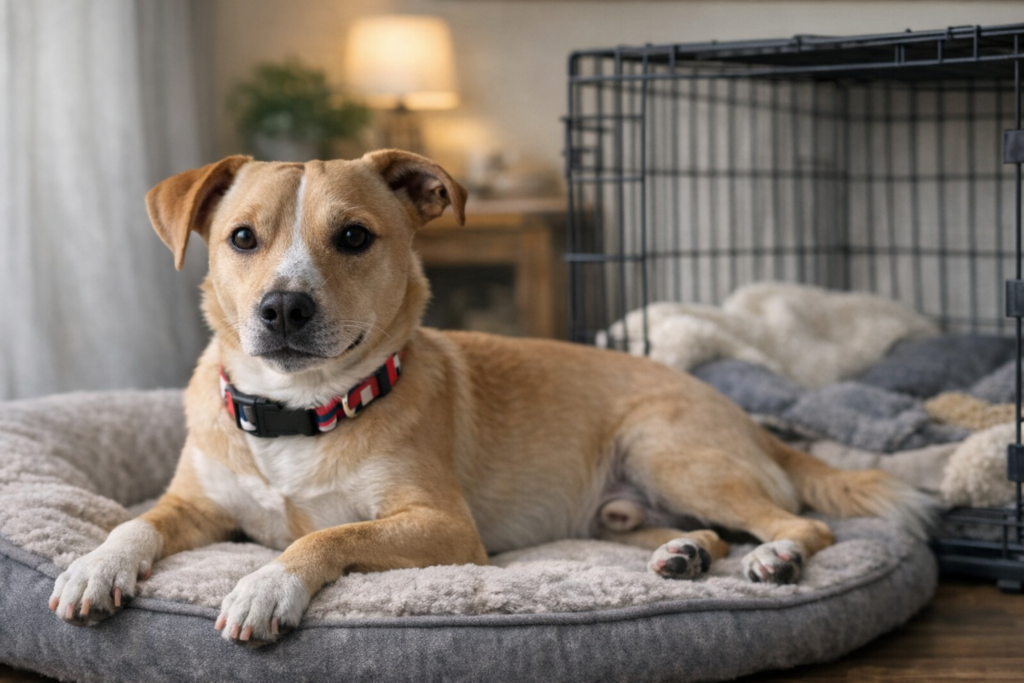
- Put a soft blanket or bed inside
- Add a chew or stuffed toy that’s safe to have unsupervised
- Leave the door wide open so your dog can look in and out
Recommended crate bed: MidWest Homes for Pets QuietTime Deluxe Mocha Ombré Swirl Plush Pet Bed (30-inch)
If you want your dog’s crate to feel cozy instead of “bare metal,” this mat is a simple way to add softness without making the crate feel crowded. The 30-inch size is designed to fit the same 30-inch wire crate we recommend in this guide, so your dog has a comfy spot to curl up while they rest between training sessions.
Why it can work well in your crate:
- Soft, plush top that helps the crate feel like a real “bedroom” instead of a cage.
- Low profile design so your dog can still stand up, turn around, and lie down comfortably without losing space.
- Non-skid bottom helps the mat stay put when your dog steps in and out, especially on smooth floors.
- Fully machine-washable and dryer-friendly (follow the label instructions), which is handy for accidents or muddy paws.
- Neutral mocha color that blends in easily with most homes and looks nice in photos and videos.
- Backed by a long-standing pet brand with thousands of reviews, so you’re not guessing on quality from an unknown company.
Safety + comfort notes to know first:
- This style of plush bed is not ideal for heavy chewers or dogs who love to shred soft toys. If your dog starts chewing the mat or pulling at the seams, remove it and offer a tougher bed or blanket instead.
- Check the bed regularly for loose threads, torn seams, or stuffing/rubber beads working their way out. If you see damage, retire the bed so your dog can’t swallow pieces.
- The padding is comfy but fairly slim. Most small and medium dogs do well with it, but large or arthritic dogs may appreciate an extra layer underneath (another pad, or a thicker orthopedic bed in a different area of the house).
- After washing, shake the bed out and reshape it so the filling spreads evenly again. Let it dry completely before putting it back in the crate.
- Always size the mat to your crate—your dog should be able to stretch out without bunching the bed up against the sides or door.
👃 Start with easy “look and sniff” experiences
Over a day or two:
- Drop a few treats just inside the door when your dog isn’t looking.
- Let them wander over, sniff, and choose to step in.
- When they go in to eat the treats, stay relaxed and neutral.
- Repeat several times so going near and into the crate feels normal.
You can also feed part of their meal in the crate with the door open. A food bowl or lick mat inside the crate gently encourages your dog to walk in and stay a little longer.
🗣️ Add a simple cue
Once your dog steps into the crate happily for treats or food, you can add a calm cue like:
- “Bed”
- “Crate”
- “In you go”
Say the cue as they move toward the crate, then reward inside. Over time, your dog will link the word with the action.
⏱️ Step 3: Build Short, Happy Crate Sessions
Only when your dog is comfortable walking in and out should you start closing the door briefly.
🔐 Start with very short door-closed moments
- Ask your dog to go into the crate (using your cue).
- Give a few treats or a stuffed chew once they’re inside.
- Gently close the door.
- Count to 5–10 seconds, then calmly open the door again.
- Let them come out if they want to.
Repeat several times, keeping it easy. The message you’re sending is:
“The door closes, good things happen, and the door opens again.”
If your dog stays relaxed, you can gradually increase the time the door is closed — from seconds to a minute or two.
🦴 Use “special” chews only in the crate
Reserve a few high-value items only for crate time, such as:
- A stuffed rubber toy with soft food or kibble mixed with a bit of wet food
- A safe long-lasting chew recommended by your vet
This helps your dog think:
“Oh, that great chew only shows up when I’m in here. Maybe this crate isn’t so bad.”
Recommended power-chewer toy: KONG Extreme Dog Toy (Medium, black)
If your dog is the type who needs something to chew, the KONG Extreme is a classic option to pair with crate time. The black “Extreme” rubber is designed for power chewers, and the hollow center lets you stuff it with food (like peanut butter or a smear of wet food) so your dog has a job to do while they relax in the crate.
Why it can work well in your crate-training plan:
- Made from KONG’s toughest natural rubber formula, built for strong chewers.
- Hollow center can be stuffed and frozen with food or treats to keep your dog busy and make the crate feel rewarding.
- Odd, bouncy shape helps satisfy chasing and fetching instincts during play sessions outside the crate.
- Easy to clean (top-rack dishwasher safe), so you can reload it with fresh fillings.
- Long track record and thousands of reviews, so you’re not guessing on quality from an unknown brand.
Important safety notes for this toy:
- Even “extreme” rubber toys are not indestructible. If your dog is a very intense chewer, always supervise at first and remove the KONG if you see chunks missing, cracks, or deep tears.
- Choose the right size for your dog’s weight and jaw strength—when in doubt, size up so they can’t fit the toy fully in their mouth.
- If your dog has ever needed surgery or vet care for swallowing toy pieces, talk to your vet before using any rubber chew toy and consider safer enrichment options instead.
- Check the toy regularly and replace it if it’s getting worn down or damaged.
👉 Check the current price of the KONG Extreme Dog Toy (Medium, black) on Amazon here.
👀 Watch your dog’s body language
Signs they’re coping well:
- Eating or chewing calmly
- Lying down on their own
- Looking around, then settling
Signs it’s too hard:
- Constant barking or crying from the moment you close the door
- Scratching or throwing themselves at the door
- Panting, drooling, or wide “worried” eyes
If you see intense signs, open the door, give them a short break, and go back to shorter, easier sessions.
🌙 Step 4: Crate Training at Night
Night-time can feel tougher because you’re also tired and just want to sleep. A bit of planning goes a long way.
🐾 For puppies
- Keep the crate close to your bed at first so your puppy can hear and smell you.
- Make sure they’ve had:
- A potty trip
- A short, calm play session
- A chance to wind down
When your puppy cries at night:
- If it’s been a while since the last potty break, calmly take them out on leash, let them go, praise quietly, and return them to the crate.
- Keep night potty trips boring and quiet — no big playtime, so they learn night is for sleep.
🐕 For adult dogs
Many adult dogs adapt quickly if:
- The crate is already familiar from daytime practice, and
- It’s placed somewhere they’d naturally rest near you
If your adult dog is very distressed at night, it’s better to go slower than to force them to stay in the crate while panicking. Build comfort with shorter evening crate sessions first.
🚪 Step 5: Practise Short Alone-Time in the Crate
Once your dog can rest in the crate with you in the same room, the next step is:
“I can relax here even when my person moves away for a bit.”
👣 Start with brief “out of sight” moments
- Put your dog in the crate with a safe chew or stuffed toy.
- Close the door.
- Step just outside the room for a few seconds, then come back in like it’s no big deal.
- Gradually add a little more time and a little more distance.
Mix in:
- Times where you move around the house but stay in sight
- Times where you leave the room for 10–30 seconds and return
The goal is to teach predictability: you leave, you come back, nothing scary happens.
If your dog has a history of separation anxiety or extreme distress when left alone, combine this with your separation-anxiety plan, and consider talking with a qualified trainer or vet behaviorist before increasing alone-time.
⚠️ Common Crate Training Mistakes to Avoid
Even loving owners can accidentally make the crate feel scary. Here are a few things to watch for.
🚫 1. Using the crate as punishment
If your dog hears:
- “That’s it, crate!”
…right after doing something “wrong,” they’ll quickly associate the crate with conflict and confusion, not rest.
Instead, think of the crate as a calm zone, not a consequence.
🐢 2. Going too fast, too soon
Jumping from “crate with door open” to “hours with the door closed” often leads to:
- Barking
- Chewing the bars
- Refusing to go in next time
It’s okay to go slower than you thought you needed. A few extra days of easy practice is better than weeks of undoing fear.
🧠 3. Ignoring your dog’s stress signals
Some dogs quietly show they’re uncomfortable:
- Sitting stiffly and staring
- Panting, drooling, or licking their lips
- Refusing food or chews in the crate
Those are signs to pause and adjust, not to push through.
🛏️ 4. Leaving the crate uncomfortable
Hard floors, no bedding, or no chew toys can make the crate feel like a waiting room, not a resting place.
Comfort doesn’t mean spoiling — it simply helps your dog’s body relax.
🛟 Troubleshooting: If Your Dog Cries or Panics in the Crate
Crying is communication. Your dog isn’t being “dramatic” — they’re telling you something is hard.
🤔 Mild protest vs. real distress
It’s normal for some dogs to:
- Whine briefly as you first close the door
- Settle after a minute or two once they start chewing or lying down
This is mild protest and often improves with consistent routine.
But if your dog:
- Screams, howls, or claws at the door
- Has accidents, drools heavily, or tries to escape
- Seems more upset each time you use the crate
…that’s a sign of strong distress, not simple complaining.
For those dogs:
- Go back to very short, easy sessions with the door open or closed only a few seconds
- Use high-value chews they love, and open the door before they start to panic
- Consider using a safe puppy pen or gated area instead of a closed crate, at least for a while
If their panic is intense or you’re worried they might hurt themselves, talk with your vet or a qualified behavior professional for a tailored plan.
🔄 How Crate Training Fits Into Your Dog’s Day
Crate time should be just one part of your dog’s routine, not the main event.
A balanced day often includes:
- Movement and play – walks, sniffing, gentle games (see your Exercise & Play guides)
- Mental enrichment – training, puzzle toys, simple scent games
- Social time – calmly being near you, family, or other pets
- Rest – naps in the crate or another quiet spot
Crate time works best when it follows a simple rhythm:
Activity → potty break → calm crate time → rest
If your dog is cooped up for long stretches, they’ll have extra energy and frustration to burn, which can make crate training harder.
🧠 When Crate Training Might Not Be the Best Fit
A crate isn’t mandatory for every dog. It may be less suitable if:
- Your dog has a traumatic history with confinement
- They show intense panic even with very slow introductions
- You have physical limitations that make crate use unsafe for you or the dog
In those cases, you can often use:
- Baby gates
- Pens or exercise runs
- A designated dog-safe room
…and still apply the same ideas: predictable routines, safe resting spots, and kind, calm handling.
Recommended exercise pen: MidWest Homes for Pets Folding Metal Dog Exercise Pen (30-inch height)
If you’d rather give your dog a bit more room than a closed crate—especially for puppies who are still crate-confused—an exercise pen can create a safe “dog playroom” they can’t wander out of. This MidWest metal exercise pen includes eight 24″ x 30″ panels that make a 16-square-foot enclosed area, which is usually plenty of space for most small to medium dogs to stretch, nap, and play with a toy. The panels clip together easily, fold flat for storage, and can be used indoors or outdoors. There’s also a step-through door with double latches, so you don’t have to lift your dog over the top every time they go in and out.
Why it can work well as a crate alternative or add-on:
- Gives puppies a bit more freedom to move, while still keeping them safely contained.
- Panels can be set up in different shapes to fit your room (square, rectangle, or octagon).
- Step-through door makes it easier on your back and less scary for nervous dogs.
- Folds flat when not in use, so it’s easy to move or store.
- Can be attached to many wire crates to create a combined “rest + play” area.
Important safety notes:
- Best for small to medium dogs or calmer larger dogs. Strong jumpers or climbers may be able to tip or bend lighter pens like this, so supervise closely.
- Always check the bars and clips for any bending or sharp edges before using, especially if your pup likes to chew metal.
- Don’t leave puppies unattended for long periods—pens are for managed freedom, not a place to park them all day.
- If you use it outdoors, bring it in after use or dry it off to reduce rust over time.
Ready to teach everyday manners too? You can pair crate training with our basic training commands every dog should learn so daily life feels calmer for both of you.
❤️ Final Thoughts
Crate training doesn’t have to be harsh or complicated. It’s really about:
- Offering your dog a safe, predictable place to rest
- Moving at a pace they can handle
- Listening to their body language instead of forcing them to “just get used to it”
Some dogs love their crate right away. Others need more time and gentle steps. Neither means you’re doing anything wrong — it just means you’re working with a real, living individual.
With patience, soft communication, and a few simple routines, the crate can become a tool that:
- Supports potty training
- Makes alone-time practice easier
- Helps your dog feel secure and settled in your home
And a settled dog is easier to train, easier to live with, and more able to enjoy everyday life with you. 🌟
The Dog Care Hub Editorial Team
The Dog Care Hub Editorial Team is a group of passionate dog lovers focused on making everyday dog care simple and beginner-friendly. We combine real-life experience with information from trusted veterinary sources to create clear, gentle guidance for new and experienced dog owners. Every article is reviewed for accuracy, safety, and ease of understanding so you can feel more confident caring for your dog.
🎁 Want the Calm Start Starter Pack (Free PDF)?
Get the free download in one click.
👉 Want to support the site? Shop our Dog Care Hub merch (hoodies, mugs, and more).