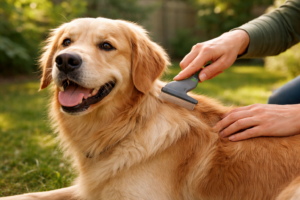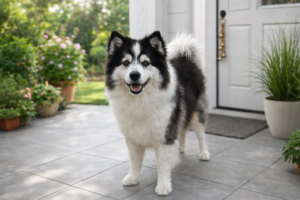

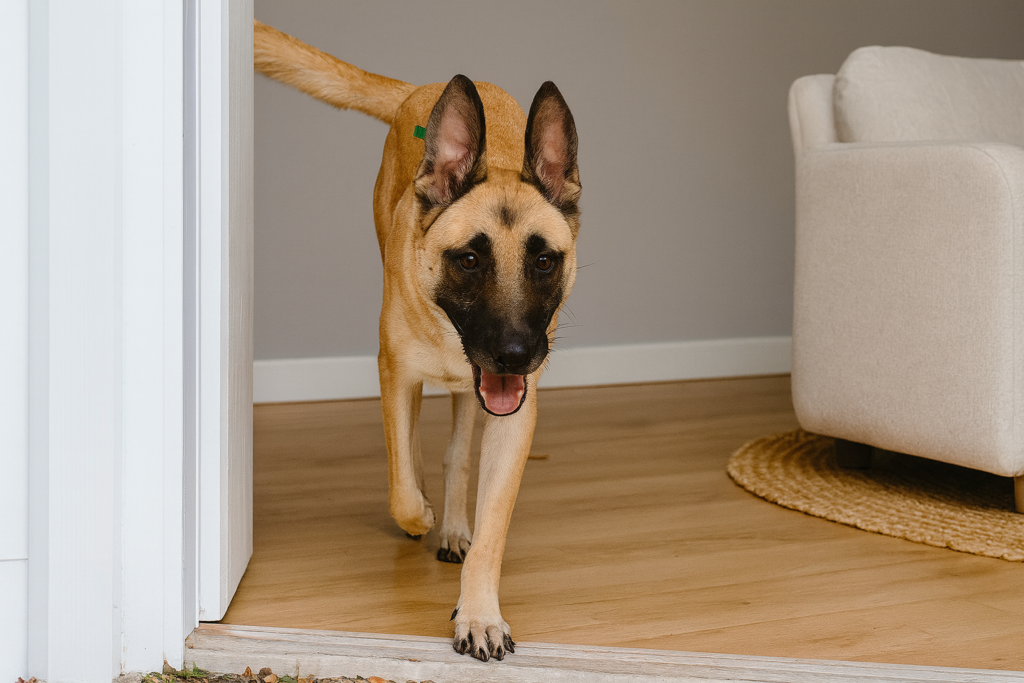
Bringing a new dog home is exciting — and a little nerve-wracking. Whether you’re adopting a puppy or an adult dog, those first few days set the tone for your life together. A calm, gentle introduction can help your new dog feel safe, and make the transition easier for everyone in the house.
This guide walks you through simple, step-by-step tips to help your new dog settle in without overwhelm.
If you’d like more ideas for early outings and new experiences, our Socialization Basics for Puppies & Adult Dogs guide walks you through what to introduce (and what to skip) in the first few weeks.
Affiliate Disclosure: Some links on this page are Amazon affiliate links. As an Amazon Associate I earn from qualifying purchases. This comes at no extra cost to you. We only recommend products we would use for our own dogs.
1. 🧺 Prepare Your Home Before Your Dog Arrives
A little preparation goes a long way. Setting things up in advance helps your dog feel like they’re walking into a cozy, safe space — not chaos.
Create a “safe spot”:
Choose a quiet area where your dog can relax, such as:
- A corner of the living room
- A bedroom
- A crate with the door open
Add:
- A comfortable bed or blanket
- Water bowl
- A couple of soft toys
Dog-proof the area:
- Put away loose wires, shoes, or kids’ toys
- Block off unsafe areas with baby gates
- Make sure trash cans have lids
This helps prevent accidents and gives your dog a calm, predictable starting point.
Recommended exercise pen: MidWest Homes for Pets Folding Metal Dog Exercise Pen (30″ height, Black E-Coated, with door)
If you want a little more freedom than a crate (without giving your dog the whole house), this MidWest metal exercise pen is a solid “safe hangout zone.” The 30-inch height is a nice sweet spot for many small-to-medium dogs, and the step-through door makes it easier to get your dog in/out without lifting over a tall panel. It also folds up when you’re done, so it’s handy for temporary setups (training, downtime, cleaning sessions, visitors, etc.).
Safety notes (worth following with any exercise pen)
- Supervision matters: Pens are great for managed freedom—not an “all-day parking spot,” especially for puppies, chewers, or high-energy dogs.
- Do a quick safety check before each use: Run your hand along seams and edges to confirm there are no sharp spots, bent wires, or damaged clips.
- Watch the “pinch-point” areas: Anywhere panels connect or the door swings/locks can pinch paws or noses—make sure the pen is fully seated and stable before your dog goes in.
- Make it harder to move: If your dog can push the pen around, place it on a non-slip surface (rug gripper mat / yoga mat / rubber mat) and keep it away from stairs or furniture they could launch from.
- Match the pen to your dog’s style: Determined climbers/jumpers may need a different containment option (or a taller/covered setup). If your dog tests boundaries, assume they’ll try again when you’re not looking.
- Indoor/outdoor care: If you use it outside, dry it off and store it inside after—moisture over time can cause wear/rust even on coated metal.
Quick setup tip: Put a comfy bed + a safe chew/lick option inside, and keep the pen experience calm and predictable—your dog should think “chill zone,” not “jail.”
Recommended floor protection for your pen/crate setup: Washable Non-Slip Pee Pad / Floor Mat (72″ x 72″)
If you’re setting up an exercise pen (especially on hardwood or carpet), a large washable mat can help with potty accidents, water bowl spills, and traction—and it makes cleanup way easier.
Safety notes (please read before using):
- CHEWING/INGESTION WARNING: This mat is not designed for chewing. If your dog starts chewing or tearing it, remove it immediately—swallowed pieces can cause choking or intestinal blockage.
- Confirm it’s truly non-slip on your floor: some “grippy” backings slide on slick surfaces—test it with a gentle push before letting your dog run/zoom.
- Prevent bunching/tripping: smooth it flat and re-adjust daily so edges don’t curl up (curling edges can cause slips).
- Chewers: if your dog chews fabric or corners, supervise and remove the mat if they start tearing it.
- Leak protection: even “waterproof” mats can fail over time—if you’re protecting valuable flooring, consider a waterproof layer underneath.
- Wash/dry properly: follow the care instructions (avoid high heat if the brand recommends it) to prevent backing breakdown.
👉 Check the current price of the Sunsleek Washable Pee Pads for Dogs 72″x72″ on Amazon here.
An exercise pen and a crate can work really well together, because they solve two different problems. A pen is great for safe, supervised freedom—your dog can stretch, play, and hang out without having full access to the house. A crate, on the other hand, is most useful as a calm “rest spot” for naps, bedtime, travel, or short periods when you need your dog to settle. If you’re using a pen as your main daytime setup, adding a simple crate can give your dog a predictable place to decompress—and it can make routines like potty training and quiet time much easier.
Recommended everyday crate to pair with an exercise pen: MidWest Homes for Pets iCrate Folding Dog Crate with Divider Panel
If you’re using an exercise pen for “managed freedom” during the day, a simple wire crate can still be a really helpful add-on for naps, bedtime, travel, or any time your dog needs a calm, predictable “off switch.” The MidWest iCrate is a popular, budget-friendly option because it folds down easily, has good airflow/visibility, and includes a divider so you can size the space appropriately as your puppy grows.
Why we like it (especially alongside a pen):
- Divider panel included so you can keep the sleeping space cozy (helpful for house-training and preventing pacing).
- Good airflow and visibility, which can feel less “closed in” for many dogs.
- Folds flat for storage/travel and is easy to move around the house.
- Simple, classic setup that works well for daily routines (nap → potty → play).
Important safety notes (please read before using)
Because no crate is perfect for every dog, use these precautions to keep things safe and stress-free:
- Size matters: choose a crate that lets your dog stand up, turn around, and lie down comfortably—then use the divider to avoid giving a tiny puppy “too much space” at first.
- Do a quick safety check on arrival: run your hand along the wire edges, corners, and door area to make sure nothing is sharp, bent, or misaligned.
- Secure the door fully every time: double-check the latch before stepping away. If your dog is a known escape artist, you may need an extra clip for peace of mind.
- No dangling gear inside: remove collars, tags, harnesses, and anything that can snag.
- Protect paws + reduce sliding: add a crate mat or non-slip pad so your dog isn’t standing on bare plastic (especially helpful for puppies and seniors).
- Watch chewers: if your dog chews the tray or bites/bends wires, stop using it and switch to a heavier-duty option.
- Supervise the first few sessions: you’re looking for calm settling (good) vs. frantic pawing/biting/bending (not a good match for this style of crate).
Recommended Gate for Creating Calm Zones (Decompression Area)
One of the easiest ways to help a new dog settle in is to limit access to the whole house at first. A good indoor gate lets you create a calm “safe zone,” keep your dog out of bedrooms or the kitchen, and prevent rushed face-to-face interactions with kids or other pets.
We recommend: Cumbor 29.7–46″ Auto-Close Baby/Dog Gate (Pressure Mounted)
It’s sturdy, widely used, and the auto-close feature is especially helpful during the first few weeks when you’re constantly walking in and out of the dog’s safe area.
Safety Notes (Please Read)
To use any pressure-mounted gate safely and avoid common issues:
- Measure first (and measure at the install height): Doorways can be wider at the baseboards than they look. Measure where the gate will actually sit.
- Avoid the top of stairs unless hardware-mounted: Pressure-mounted gates can slip if bumped or pushed. If you need a gate at the top of stairs, use a hardware-mounted model instead.
- Expect a bottom bar (trip hazard): Most walk-through gates have a lower bar. Step carefully—especially when carrying laundry, a baby, or moving fast.
- Install tightly + re-check tension: Tighten the tension knobs/screws and re-check every few days at first (and weekly after). Gates can loosen over time with daily use.
- Don’t rely on it for heavy impact: If you have a strong, determined dog that slams gates, consider a hardware-mounted gate for higher security.
- Supervise kids and pets around gates: Don’t allow climbing, hanging, or shaking the gate.
- Use the gate as a “boundary,” not a crate replacement: The goal is calm separation and controlled access—not confinement without supervision.
2. 🚗 The First Car Ride Home
The journey home is your dog’s first experience with you, so keep it as calm as possible.
Tips for the car ride:
- Use a crate, dog seatbelt, or harness to keep them secure
- Talk to them in a soft, relaxed voice
- Avoid loud music or lots of people crowding around
- If possible, have one person drive and another sit near the dog for reassurance
Some dogs may pant, drool, or seem unsure — that’s normal. Stay calm; your energy helps them feel safer.
Recommended car safety setup: Removable Dog Seat Belt Harness for Car (3-in-1 harness + tether)
A calm first ride home is easier when your dog is secured. A simple car harness + tether helps prevent roaming, sudden jumps when doors open, and unsafe driver distractions — while still letting your dog sit or lie down comfortably in the back seat.
Why it can work well for the ride home:
- Helps keep your dog in one spot instead of climbing into the front.
- Useful for short trips (pickup day, vet visits, quick drives) when you need an easy setup.
- Adjustable length so you can limit how far they can move.
Important safety notes (please read before using):
- Attach to a harness, not a collar. A collar connection can increase choking/neck injury risk if your dog pulls or gets twisted.
- Keep the tether short enough to prevent tangling. You want “sit/lie down” range — not enough length for the dog to climb over the seat edge.
- Back seat only. Avoid the front seat because airbags are dangerous for dogs.
- Not for chewers or heavy pullers. If your dog chews straps, panics, or lunges hard, choose a sturdier setup (or a secured travel crate) instead.
- Inspect before every ride. Replace immediately if you see fraying, stretched stitching, cracked clips, or bent hardware.
- Never leave your dog tethered in a parked car. Overheating and entanglement risks go up quickly.
- If you want the most stable option for anxious dogs (or longer drives), a secured travel crate can be even safer than a tether setup
✅ Recommended: Crash-Tested Dog Car Carrier (Small Dogs)
If your new dog is small and you want the most secure option for that very first car ride, a crash-tested carrier is a great choice. This Crash-Tested Dog Car Carrier (FMVSS 213b tested + 5-Star safety rated by CPS, per the listing) is designed to keep small dogs contained and protected, while also giving them a cozy, enclosed space that helps nervous pups settle faster.
Size/weight: Made for small dogs (best for safe travel up to 15 lbs — always confirm your dog’s measurements and the product size chart before buying).
Install it tightly: Follow the instructions so the carrier is properly secured with the vehicle seat belt and doesn’t slide or tilt.
Back seat only: Place it in the back seat, never the front (front airbags can be dangerous for pets).
Prevent chewing damage: If your dog is a chewer, supervise closely and inspect straps, stitching, buckles, and zippers regularly.
Practice before the trip: Let your dog sit in it at home first (treats + short sessions) so the first ride feels calmer.
(Large-Dog Travel Crate Pick)
If you’re looking for a rugged, road-trip-ready crate for a medium-to-large dog, the Mammoth Guardian Dog Kennel 36″ is a strong option. It’s built for travel and outdoor use, with reinforced corners, a secure 3-bolt latch, and protective bumpers that help absorb knocks and bumps. It also offers optional wheels, which is a big plus because this style of heavy-duty kennel can be cumbersome to move.
Safety notes (please read):
- “Large dog” doesn’t mean “every large dog.” This kennel is best for dogs that fit the manufacturer’s sizing guidance (measure your dog’s height and nose-to-base-of-tail length before buying). Giant breeds may need a larger crate.
- This is a sturdy travel kennel, but don’t treat it as crash-tested protection. For car travel, always secure the crate so it can’t slide or tip.
- Inspect immediately on arrival. A few buyers report issues like missing hardware or damaged parts, so open the box right away, confirm all bolts/washers/hardware are included, check door alignment + latch, and request a replacement/return right away if anything looks off.
👉 Check the current price of the Mammoth Guardian Dog Kennel 36″ (Lagoon Blue) on Amazon here.
3. 🚪 The First Moments Inside Your Home
When you first walk in the door, it’s tempting to shower your dog with attention. Instead, keep things low-key and gentle.
Step-by-step:
- Before going inside, give your dog a quick bathroom break in your yard or designated potty spot.
- Bring them indoors on a leash, so you can gently guide where they go.
- Walk them calmly to their safe spot and let them explore at their own pace.
Avoid inviting friends or family over right away. The first day should be about quiet bonding, not a party.
Not sure what your new dog is feeling those first few days? Use our Dog Body Language: How to Understand What Your Dog Is Really Saying guide as a quick reference while you settle in together.
4. 🏠 Let Your Dog Explore Slowly
Don’t let your new dog run through the entire house immediately. That can be overwhelming — especially for shy or nervous dogs.
Start small:
- Allow access to one or two rooms at first
- Supervise as they sniff and explore
- Gradually open more areas over the next few days
If they seem unsure, sit on the floor nearby and let them approach you when they’re ready. Never force interaction.
If you’d like their safe spot to be a cozy crate, start with Calm Crate Training for Beginners so the crate feels like a bedroom, not a punishment.
5. 👨👩👧 Introducing Family Members Calmly
Everyone is excited to meet the new dog — but too much excitement can be scary.
Guidelines for family introductions:
- Have people sit or kneel instead of towering over the dog
- Let the dog approach first
- Offer a hand to sniff, then gentle pets on the chest or side (not over the head at first)
- Keep voices soft and movements slow
For young children:
- Teach them to be “gentle and quiet friends”
- No hugging, climbing, or grabbing
- Always supervise early interactions
6. 🐶 Meeting Other Pets in the Home
If you have other dogs or cats, introductions should be slow and controlled.
🐕 Introducing dog to dog:
- Start in a neutral area (like outside in the yard or on a walk)
- Have both dogs on leashes, with some space between them
- Walk side-by-side with a little distance, then gradually allow them to sniff
- Watch for relaxed body language: loose tails, soft faces, curving approaches
If either dog stiffens, growls, or looks uncomfortable, calmly separate them and try again later with more distance.
For more help building confident, friendly greetings with other dogs and people, check out Socialization Basics for Puppies & Adult Dogs for step-by-step exposure ideas.
🐱 Introducing dog to cat:
- Keep the dog on a leash
- Let the cat choose how close to get
- Provide escape routes and high places for the cat
- Reward the dog for calm behavior around the cat
Take this slowly over several days — or longer if needed.
7. ⏰ Establish a Simple Routine
Dogs feel safer when they know what to expect.
Create a basic daily rhythm:
- Regular feeding times 🥣
- Morning and evening potty breaks 🚶♂️
- Short walks or play sessions
- Quiet time / rest time
You don’t need a perfect schedule, but having a consistent pattern helps your dog relax and adjust more quickly.
8. 🍖 First Meals in the New Home
Food is a big source of comfort — but sudden diet changes can cause upset stomach.
Feeding tips for the first week:
- If possible, start with the same food your dog was eating before
- If you want to switch foods, do it slowly by mixing new with old over 7–10 days
- Feed in a quiet corner, away from heavy foot traffic
- Pick up the bowl after 15–20 minutes to create a gentle routine
If your dog is too stressed to eat on day one, don’t panic. Give them time and keep things calm.
9. 🧠 Training Starts from Day One (Gently)
You don’t need formal training sessions right away, but small habits matter from the beginning.
Good “first week” behaviors to encourage:
- Reward your dog for coming to you 🦴
- Gently guide them to the potty spot and praise when they go
- Show them where to sleep and reward calm resting
- Redirect chewing to appropriate toys
Keep things positive — no shouting or harsh corrections. Your main goal in week one is building trust.
10. 😌 Watch for Stress Signals
Adjusting to a new home is a big change. Many dogs show stress or uncertainty in subtle ways.
Common signs of stress include:
- Excessive panting (when not hot)
- Pacing or restlessness
- Hiding or avoiding contact
- Yawning, lip-licking, or shaking off frequently
If you see these signs, slow things down:
- Give your dog space in their safe spot
- Reduce noise and activity
- Shorten interactions and keep them calm and positive
If you ever notice severe fear, aggression, or health concerns, contact a veterinarian or certified trainer for help.
🧡 Final Thoughts
Bringing a new dog home is the beginning of a beautiful relationship. The key is patience, calm energy, and simple routines. Give your dog time to settle, keep things predictable, and focus on building trust in these early days.
With gentle guidance and a little understanding, your new dog will soon feel like they’ve always been part of the family. 🐾
The Dog Care Hub Editorial Team
The Dog Care Hub Editorial Team is a group of passionate dog lovers focused on making everyday dog care simple and beginner-friendly. We combine real-life experience with information from trusted veterinary sources to create clear, gentle guidance for new and experienced dog owners. Every article is reviewed for accuracy, safety, and ease of understanding so you can feel more confident caring for your dog.
🎁 Want the Calm Start Starter Pack (Free PDF)?
Get the free download in one click.
👉 Want to support the site? Shop our Dog Care Hub merch (hoodies, mugs, and more).