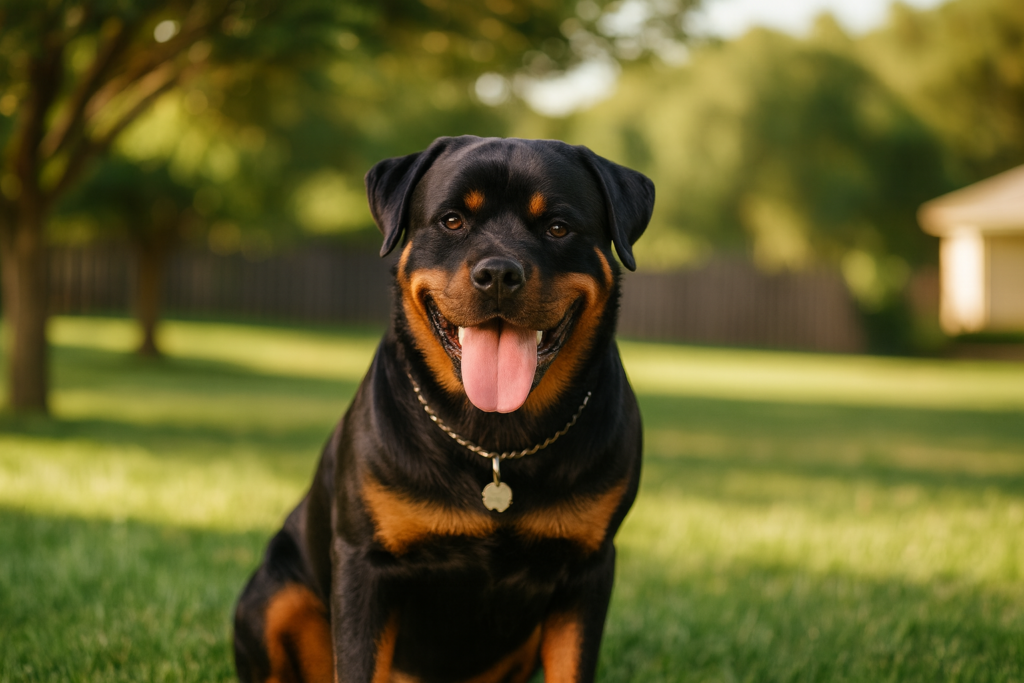
Separation anxiety is one of the most common challenges dog owners face, but the good news is that most cases can be prevented with simple daily habits. Whether you have a young puppy or an adult rescue, helping your dog feel calm and confident when alone is an important part of building a happy home life together.
Affiliate Disclosure: Some links on this page are Amazon affiliate links. As an Amazon Associate I earn from qualifying purchases. This comes at no extra cost to you. We only recommend products we would use for our own dogs.
🐶 What Is Separation Anxiety — and Why It Happens
Separation anxiety is one of the most common behavior struggles dog owners face. It happens when a dog becomes distressed, anxious, or panicked when left alone — even for short periods.
Most dogs can learn to be comfortable on their own, but without guidance, some dogs develop big feelings that lead to barking, destruction, pacing, house accidents, or attempts to escape.
The good news?
You can prevent separation anxiety before it becomes a real problem.
Whether you have a puppy or an adult rescue, small daily habits make a huge difference.
⚠️ Early Signs of Separation Anxiety
Spotting the early signals helps you step in before the problem escalates.
Look for these behaviors:
Mild Signs
- Following you from room to room
- Whining when you leave the house (or even leave the room)
- Waiting by the door when you’re gone
- Not settling when left alone
Moderate Signs
- Barking, howling, or crying after you leave
- Pacing around doors or windows
- Drooling or panting when you put on shoes or grab keys
Severe Signs
- Destructive chewing or scratching near doors/windows
- Escape attempts
- Indoor accidents only when left alone
- Heavy, nonstop vocalizing
If your dog shows any of these signs early, don’t panic — it’s absolutely fixable with the right steps.
🌿 How to Prevent Separation Anxiety (The Steps That Actually Work)
These are the exact, science-based habits that help your dog become confident, relaxed, and independent.
1. Build a Calm, Predictable Routine
Dogs thrive on knowing what to expect.
Try to keep daily:
- Mealtimes
- Walks
- Play sessions
- Quiet time
Predictability = lower stress and fewer anxiety-related behaviors.
2. Practice Alone Time in Small, Gentle Steps
Don’t wait until you need to leave your dog alone — start early.
Begin with:
- 1–2 minutes out of the room
- return calmly
- gradually increase to 5, 10, 20 minutes
This slow exposure teaches your dog that:
“Being alone is safe — and you always come back.”
If you’re just starting to build steadier routines, our Start Here guide walks you through simple daily habits that support calmer alone-time.
3. Keep Departures and Arrivals Low-Key
A big mistake many owners make is creating emotional “highs and lows” around leaving or returning.
Do this instead:
- No long goodbyes
- No excited greetings
- Calm in, calm out
You want leaving to feel boring — not an event.
4. Give Your Dog Something to Do While You’re Gone
A busy brain = a relaxed dog.
Great enrichment options:
- Frozen Kong with peanut butter or wet food
- Lick mats
- Food-puzzle toys
- Long-lasting chews
- Snuffle mats
Food-puzzle toy we love (for supervised play)
If your dog enjoys puzzles and isn’t a heavy chewer, we really like the Outward Hound Nina Ottosson Dog Twister (Level 3) – it gives them a fun brain workout and turns mealtime into a little mission instead of just a bowl of food. It’s best used when you’re home so you can help if they get stuck and make sure they’re not chewing the plastic pieces.
👉 Heavy chewer or likes to shred toys? Skip this one and choose a:
– Snuffle mat or lick mat, or
– Solid rubber food toy (like a KONG Extreame Dog Toy). We recommend our favorite below).
Those are safer options for power-chewers and for longer alone-time.
👉 You can check the current price of the Dog Twister puzzle toy here
⭐ Our Favorite Lick Mat: GORILLA GRIP BPA-Free Silicone Lick Mat (2-Pack)
If your dog enjoys licking but tends to get wiggly or anxious during baths, nail trims, or crate time, this lick mat is an awesome way to keep their brain busy and mouth happily occupied. The GORILLA GRIP BPA-Free Silicone Lick Mat has four different textures to help your dog work for every bit of peanut butter, wet food, or yogurt, and the 49 strong suction cups on the back help it stay put on smooth surfaces like tile, glass, or the side of the tub. It’s dishwasher and freezer safe, so you can prep a few ahead of time, freeze them, and then just rinse everything clean when your dog is done. The 2-pack also means you can keep one ready while the other is in the wash.
Safety notes: This is a licking toy, not a chew toy. Always supervise your dog when using any lick mat. If your dog starts gnawing, biting, or ripping at it, pick it up immediately. For heavy chewers, skip soft lick mats altogether and choose a snuffle mat or a solid rubber food toy (like a KONG Extreme Dog Toy) instead—those are much safer for dogs who love to destroy things with their teeth. We recommend our favorite below).
👉 Check the current price of the GORILLA GRIP BPA Free Silicone Lick Mat for Dogs on Amazon here.
Recommended rubber food toy for heavy chewers: KONG Extreme Dog Toy (Medium, black)
If your dog is a serious chewer, a stuffed KONG Extreme is one of the safest ways to give them something to work on during alone-time. The black “Extreme” rubber is designed for power chewers, and the hollow center lets you stuff it with your dog’s meal or high-value treats (like wet food or peanut butter) to keep them busy and relaxed.
Why it’s a good fit for anxious, chewy dogs:
- Made from KONG’s toughest natural rubber formula for strong chewers.
- Can be filled and frozen to make the game last longer and encourage calm licking instead of frantic chewing.
- Odd, bouncy shape turns it into a fun fetch toy too, so you can use it for play as well as solo enrichment.
- Easy to clean and dishwasher-safe (top rack).
Important safety notes for heavy chewers:
- No toy is indestructible. If your dog is a very intense chewer, always supervise at first and remove the KONG if you see chunks missing, cracks, or pieces starting to tear off.
- Choose the right size for your dog to reduce the risk of choking or swallowing large pieces.
- If your dog has had dental work or surgery, or tends to swallow toys, talk to your vet before using any rubber chew toy.
- Replace the toy if it’s getting worn down, sticky, or cracked.
👉 Check the current price of the KONG Extreme Dog Toy (Medium, black) on Amazon here.
This teaches your dog to settle and relax during alone time.
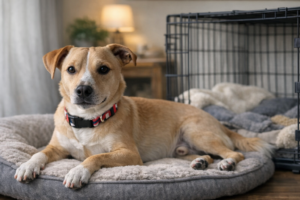
5. Create a Safe Relaxation Spot
A comfortable, quiet place helps your dog feel secure.
This could be:
- A cozy bed
- A gated puppy-safe area
- A crate (if crate-trained and enjoys it)
- A dog-proofed room
Add:
✔️ soft blanket
✔️ safe chew
✔️ calming background noise (TV, fan, or soft music)
Some dogs also relax better when they have a cozy crate. If you’d like to try that, start with gentle, calm crate training so the crate feels safe, not scary.
6. Use “Calm Independence” Exercises Daily
Teach your dog that it’s okay to rest away from you.
Practice:
- Laying on their bed while you cook
- Settling on the couch while you work
- Staying in another room for a few minutes
Small independence moments = confidence over time.
7. Watch for Triggers (and Don’t Accidentally Build Anxiety)
Dogs quickly associate cues like:
- picking up keys
- putting on shoes
- grabbing your bag
…with you leaving and feeling anxious.
Help by:
- picking up keys randomly throughout the day
- putting shoes on and not leaving
- grabbing your bag and sitting down
These “decoy actions” lower emotional reactivity.
🐕 What to Avoid (These Make Anxiety Worse)
Never do these — they can unintentionally increase your dog’s stress.
🚫 Punishing barking or whining
🚫 Forcing your dog to “just deal with it”
🚫 Coming home during panic and yelling “No!”
🚫 Leaving for long periods too quickly
🚫 Making departures overly emotional
These don’t teach calmness — they teach fear and confusion.
💛 What to Do If Your Dog Already Shows Signs
Mild or moderate anxiety can often be solved with:
- Short, structured alone-time practice
- Increasing daily mental + physical enrichment
- Teaching independence exercises
- Reducing over-attachment habits
Severe separation anxiety may need:
- a gradual training plan
- help from a certified trainer or behaviorist
- temporary management (dog sitter, daycare, etc.)
The sooner you address it, the easier it is to fix.
❤️ Final Thoughts
Preventing separation anxiety isn’t about strict training — it’s about teaching your dog confidence, calmness, and trust.
With:
- predictable routines
- positive alone-time practice
- the right enrichment
- and small daily independence exercises
…your dog will learn that being alone is safe, normal, and nothing to fear.
A confident dog is a happier dog — and life becomes easier for both of you. 🐾
When you’re ready to keep building calm routines, these gentle guides can help next:
• [How Much Should I Feed My Dog?] – make mealtimes predictable so your dog isn’t stressed or hungry.
• [Calm Crate Training for Beginners] – turn the crate into a safe bedroom, not a “time-out” spot.
• [Basic Training Commands Every Dog Should Learn] – use simple cues to build confidence and communication.
• [Potty Training Basics for Puppies & Adults] – reduce accidents and frustration, so everyone feels more relaxed.
The Dog Care Hub Editorial Team
The Dog Care Hub Editorial Team is a group of passionate dog lovers focused on making everyday dog care simple and beginner-friendly. We combine real-life experience with information from trusted veterinary sources to create clear, gentle guidance for new and experienced dog owners. Every article is reviewed for accuracy, safety, and ease of understanding so you can feel more confident caring for your dog.
🎁 Want the Calm Start Starter Pack (Free PDF)?
Get the free download in one click.
👉 Want to support the site? Shop our Dog Care Hub merch (hoodies, mugs, and more).