
Bringing home a new puppy is exciting — but one of the very first lessons they need to learn is where to go potty. While accidents are normal in the beginning, a consistent routine and positive approach will help your puppy learn quickly and confidently.
This guide walks you through a clear, step-by-step potty training plan, realistic timelines, and helpful tips to set your pup up for success.
If you’re still getting used to life with a new dog, our Start Here guide for new dog owners walks you through the first few weeks step by step.
Affiliate Disclosure: Some links on this page are Amazon affiliate links. As an Amazon Associate I earn from qualifying purchases. This comes at no extra cost to you. We only recommend products we would use for our own dogs.
1. 🏠 Start With a Consistent Routine
Puppies thrive when they know what to expect. A predictable schedule makes potty training faster and reduces stress for everyone.
Take your puppy out at the same times every day:
- First thing in the morning
- After meals
- After playtime
- After naps
- Before bedtime
Most puppies need to go every 1–2 hours depending on age.
How long can most puppies realistically hold it?
- 8–10 weeks: every 1–2 hours
- 3 months: every 2–3 hours
- 4–5 months: every 3–4 hours
- 6+ months: up to 4–6 hours (with training)
Why routine matters:
A regular schedule helps your puppy connect the feeling of “I need to go” with the correct potty spot — and that means fewer indoor accidents.
For help timing potty breaks around meals, check out How Much Should I Feed My Dog? so feeding and bathroom schedules work together.
2. 🐾 Choose the Right Potty Spot
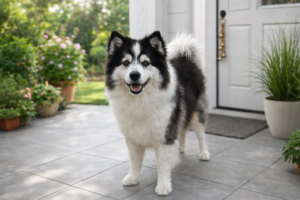
Pick one outdoor area where you want your puppy to go.
Always take them to this same spot so they can associate the area with potty time.
Make it successful by:
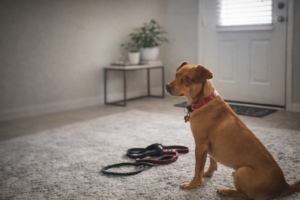
- Keeping the leash short so they stay focused
- Standing still and calm (avoid play during potty time)
- Using the same cue word each time: “Go potty!”
Once your puppy goes, praise right away — timing is everything!
Want your puppy to tell you they need to go out? Potty training bells can be a simple signal—here’s how to teach them (plus the best options).
3. 🎉 Reward Immediately (Within 2 Seconds!)
Puppies learn fastest through positive reinforcement.
The moment your puppy finishes going, reward with:
- Excited praise
- A small treat
- Gentle affection
💡 Important: Don’t wait until you get back inside.
They must know the reward is for going potty outside, not just for coming indoors.
Recommended training treat: Wellness Puppy Bites Natural Grain Free Puppy Training Treats
If you want a tiny, high-value reward you can use dozens of times a day without overloading your puppy, these Wellness Puppy Bites are a great fit. They’re soft, smelly (in a good way for dogs!), and already bite-sized, which makes it easy to deliver rewards quickly while you’re teaching potty manners and basic cues.
Why we like it:
- Specifically formulated for puppies, with DHA to support healthy brain development.
- Soft and easy to chew, even for very young pups or small breeds.
- Small pieces so you can reward often without filling your puppy up.
- Grain-free recipe with no artificial colors or preservatives.
- Comes in multiple flavors, which helps keep picky pups interested during training sessions.
- Resealable bag that’s easy to toss in a treat pouch or keep by the door for quick “potty party” rewards.
Good to know:
- Like any treat, these should make up only a small part of your puppy’s daily calories. You can break each piece into even smaller bites for tiny pups.
- A few dogs don’t love the taste or have more sensitive stomachs. Start with just a couple of pieces the first day and stop if you notice any tummy upset.
- For puppies with known food sensitivities or very sensitive digestion, you may prefer a single-ingredient, freeze-dried treat (such as pure chicken or salmon) as an alternative.
- Keep a small stash by the door or in a treat pouch so you can reward within 1–2 seconds of your puppy finishing their potty outside—that timing is what really makes the treat powerful.
👉 Check current price of Wellness Puppy Bites Natural Grain Free Puppy Training Treats on Amazon
Optional tiny training treats: Zuke’s Mini Naturals Dog Training Treats
If you want a super small, low-calorie treat you can use all day without overloading your puppy, Zuke’s Mini Naturals are a great choice. Each piece is tiny and soft, so you can reward quickly and often while you’re building those “go potty outside!” habits.
Why we like it:
- Tiny and low-calorie: About 2–3 calories per treat, so you can give lots of rewards during training sessions.
- Soft texture: Easy for puppies to chew and swallow, even with little teeth.
- Perfect size for rapid rewards: You don’t have to break every piece into crumbs to keep portions small.
- Multiple flavors: Comes in several recipes (like chicken, peanut butter & oats, salmon, and more) so you can choose what your puppy’s tummy and tastebuds like best.
- Well-known training treat: Popular with trainers and puppy owners for everyday, high-frequency training.
Good to know:
- If your puppy has a sensitive stomach or food allergies, check the ingredient list and start with just a few pieces to make sure they tolerate it well.
- For tiny puppies or very treat-motivated dogs, you can still break the pieces in half to stretch them even further.
- These are meant for training, not as a full snack — most of your puppy’s calories should still come from their regular food.
👉 See all available flavors on Amazon
Optional “jackpot” treat: Stewart Freeze-Dried Beef Liver Dog Treats
When your puppy has a big win (first pee outside, sleeping through the night, going to the door on their own), it helps to have a super special “wow!” reward. Freeze-dried beef liver is one of those high-value treats many dogs go wild for, and Stewart’s single-ingredient liver cubes are a popular choice.
Why we like it:
- Single ingredient: Made from 100% beef liver – no grains, fillers, or added junk, which keeps it simple and high-protein.
- Serious motivation power: Most dogs find the smell and taste irresistible, so it’s perfect for extra-important moments.
- Easy to break up: The cubes can be snapped into tiny pieces so you can reward without overdoing calories.
- Trainer-style treat: Freeze-dried liver has been used by trainers for decades as a “gold standard” high-value reward.
- Shelf-stable: Comes in a resealable pouch/tub that keeps pieces dry and handy for potty-training sessions.
Good to know:
- Because it’s rich, start with a tiny piece (especially for small or sensitive-stomach pups) and watch how your puppy does.
- Use it only occasionally as a “jackpot” reward, not as an everyday snack.
- Like any rich treat, it can upset some dogs’ stomachs—if you notice vomiting, diarrhea, or extra gassiness, stop using it and talk with your vet.
- When your order arrives, check the best-by date and packaging; if anything looks off or expired, contact Amazon for a replacement.
How to use it as a jackpot reward:
- Keep a few tiny pieces in a treat pouch or jar near the door.
- Give 1 small piece right after a major “win” (first successful outdoor pee, going to the door and waiting, overnight success, etc.).
- Pair it with happy praise (“Yes! Great potty!”) so your puppy connects this awesome treat with doing the right thing.
👉 Click here to check current price of Stewart Freeze-Dried Beef Liver Dog Treats on Amazon
4. 🚫 Prevent Accidents Before They Happen
Supervision is the secret to fast potty training.
When indoors:
- Keep your puppy in the same room as you
- Use baby gates or a playpen
- Watch for signs they need to go:
- Sniffing the floor
- Circling
- Wandering away
- Whining or pacing
If you see these, calmly take them out right away.
Carlson Extra Tall Walk Through Pet Gate with Small Pet Door (with 4″ Extension & Wall Mount Kit)
Keeping your puppy in the right area is one of the fastest ways to cut down on accidents. This extra-tall walk-through pet gate makes it easy to block off carpeted rooms, stairs, or kids’ spaces while still letting you move around the house normally.
Use it to create a simple “potty training zone” in an easy-to-clean area (kitchen, laundry room, hallway) so your puppy isn’t sneaking off to pee where you can’t see them.
Why we recommend this gate for potty training
- Tall enough for jumpy pups
At about 36″ high, it’s much harder for most puppies and small/medium dogs to hop over, so your boundaries actually stay in place. - Perfect for creating safe, easy-to-clean zones
Block off “no-pee” areas (carpet, beds, kids’ rooms) and keep your puppy in places that are quick to wipe up if there’s an accident. - Walk-through door for humans
No more climbing over flimsy gates. You just open the handle, walk through, and close it behind you—huge quality-of-life upgrade if you’re going in and out all day. - Built-in small pet door
Includes a mini door you can leave open if you want cats or tiny dogs to pass through while your larger puppy stays put. - Flexible sizing for most homes
Fits typical doorways/openings from about 29″–36.5″ wide thanks to the included 4″ extension. Great for hallways and standard interior doors. - Pressure mount + optional wall hardware
You can install it without drilling for everyday use, or use the included wall-mount kit for extra security—especially helpful with stronger dogs or heavy household traffic.
Safety notes (please read)
We want you to have realistic expectations and use this gate safely. Some lower reviews mention the following issues—here’s how to handle them:
- Bottom bar can be a trip hazard
Like most walk-through gates, there’s a bar along the bottom.- Make sure everyone in the household knows it’s there.
- Be extra careful when carrying laundry, kids, or groceries.
- We do not recommend using this style of gate at the very top of stairs unless it’s securely installed and you’re confident no one will trip over the bar.
- Measure your opening carefully
A few customers had trouble when their doorway was at the very edge of the listed size range.- Measure your opening before you buy.
- If your doorway is unusually narrow or wide, choose a model designed specifically for that size.
- Check the tension & hardware regularly
Some people reported the gate feeling flimsy or loosening over time.- Follow the instructions closely during installation.
- Use the included wall-mount hardware for stronger dogs or higher-traffic areas.
- Give the tension knobs and screws a quick check every so often to make sure everything is still tight.
- Very small animals may squeeze through
The spacing and small pet door are fine for most dogs, but tiny kittens or toy-breed puppies can sometimes slip through gaps. Supervise very small animals closely or choose a more solid barrier if needed.
Bottom line:
For most dog owners, this Carlson pet gate is a practical, budget-friendly way to block off “no-pee zones,” protect your floors, and keep your puppy in a safe, easy-to-clean area while you work through potty training—just use it with sensible installation and awareness of the bottom bar.
👉 Check current price and details here:
Carlson Extra Tall Walk Through Pet Gate with Small Pet Door – see it on Amazon
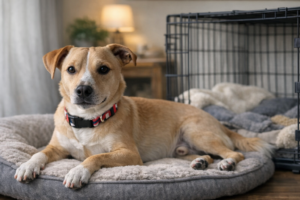
5. 🏡 Use a Crate to Encourage Success (Not Punishment)
Crates help puppies learn to hold their bladder because dogs naturally avoid soiling their sleeping area.
A properly sized crate allows your puppy to:
- Stand
- Turn around
- Lie down comfortably
How to use it:
Take your puppy outside immediately after opening the crate — this teaches them the routine quickly.
Never use the crate as punishment. It should feel like a safe, cozy place.
Recommended crate for potty training: MidWest Homes for Pets iCrate Folding Dog Crate with Divider Panel (Single or Double Door)
If you’re potty training a puppy, a properly sized crate with a divider panel can make a huge difference. The divider lets you keep the sleeping space just big enough for your puppy to stand up, turn around, and lie down comfortably — which helps prevent the “sleep on one side, potty on the other” problem that slows training.
Why it’s a good pick:
- Includes a divider panel so you can start with a smaller puppy-sized space and expand it as your dog grows.
- Strong, simple wire design that’s easy for most families to set up and use daily.
- Leak-proof removable tray for quick cleanups (because accidents happen during training).
- Secure latches + good airflow so your puppy stays safe and comfortable while resting.
- Tons of real reviews (this is one of the most commonly used crate styles for home potty training).
Good to know:
- Choose the right size: it’s usually best to buy based on your dog’s adult size, then use the divider to keep the space small while they’re learning.
- If your puppy has repeated accidents inside, reduce the available space slightly (with the divider) and increase potty breaks — it usually means the crate area is too large or the schedule needs tightening.
- Always remove collars inside the crate (to avoid snagging), and keep early crate time calm and short so it feels safe — not like punishment.
How to use it for potty training (simple routine):
- Take your puppy out immediately after opening the crate (this builds the habit fast).
- Keep crate time short at first, then slowly increase as your puppy succeeds.
- If your puppy cries, stay calm and ask: Do they need to potty, or do they just want attention? Keep nighttime trips boring: potty → back to crate.
Extra safety note
When your crate arrives, do a quick 2-minute safety check before your puppy uses it: make sure nothing is bent, doors latch smoothly, and there are no sharp edges or broken wires. If anything looks off, exchange it right away.
For dogs who are escape artists, heavy chewers, or panic in crates, a heavier-duty crate may be safer than a standard wire crate.
👉 Check current price of MidWest Homes for Pets iCrate Folding Dog Crate with Divider Panel on Amazon
If you’re crate training too, follow our Calm Crate Training for Beginners guide so the crate feels cozy and safe, not scary.
6. 🕒 Understand Realistic Timelines
A puppy’s ability to “hold it” depends on age.
A helpful rule of thumb:
Age in months = maximum hours they can hold it.
(Example: a 3-month-old = about 3 hours.)
Most puppies aren’t fully reliable until 5–6 months old, but progress happens much sooner with consistency.
7. 💧 Handle Accidents Calmly
Accidents are normal. Your puppy is learning!
When it happens:
- Clean the area with an enzymatic cleaner. (We’ll share a specific recommendation in Step 9 below.)
- Ignore the accident — no scolding or rubbing noses
- Take them outside to the potty spot (but don’t punish)
Punishment confuses puppies and slows training.
Common Potty Training Problems (and What to Do)
Puppy pees right after coming back inside
This usually means your puppy didn’t fully empty outside or was too distracted to finish. Next time, stay out a bit longer, keep them on leash, walk them around quietly, and give them a second chance to go before you come back inside—then reward like crazy the moment they finish.
Puppy suddenly regresses after doing great
Setbacks are normal, especially during growth spurts, routine changes (moving, travel, new schedule), or when supervision gets looser. Go “back to basics” for 1–2 weeks: more frequent potty breaks, tighter supervision, and big rewards for outdoor success. If accidents are frequent or come with straining, blood, or discomfort, call your vet to rule out a medical issue.
Puppy pees in the crate
Most of the time, the crate is either too big (they can sleep in one corner and potty in another) or the puppy is being asked to hold it longer than they realistically can. Use the divider to make the space just big enough to stand up, turn around, and lie down, and stick to the age-appropriate potty schedule from earlier in this guide. If your puppy is soaking the crate or seems uncomfortable, chat with your vet.
Puppy only wants to go on walks, not in the yard
Some puppies learn that walks are “bathroom time” and yards are “play time.” For a couple of weeks, take your puppy on leash to the exact same potty spot in the yard, say your potty cue (“go potty”), and stand fairly still until they go—then reward and release them to play. If they don’t go after a few minutes, take them back inside on leash, wait a bit, and try again so they learn the yard potty spot means business.
If your puppy gets very distressed when you leave the room or house, our How to Prevent Separation Anxiety in Dogs guide can help you build calm, confident alone-time.
8. 🌙 What About Nighttime?
Young puppies may need 1–2 nighttime bathroom breaks.
Night tips:
- Take them out right before bed
- Keep nighttime trips calm and quiet
- Go straight outside → potty → back to sleep
As they grow, they’ll naturally sleep longer stretches.
9. 🧼 Use the Right Cleaning Products
Regular cleaners leave lingering smells that encourage repeat accidents.
Look for:
- Enzymatic cleaners (break down urine proteins)
- Products labeled “pet odor eliminator”
A clean environment prevents setbacks.
Recommended cleaner: Nature’s Miracle Simply Pet Stain & Odor Remover (128 oz)
If you’re potty training a puppy, an enzymatic cleaner is a must-have. Nature’s Miracle Simply Pet Stain & Odor Remover (128 oz jug) is a popular option because it uses bio-enzymes to break down urine, poop, and vomit instead of just covering up the smell. Used correctly, it can save your carpets, rugs, and hard floors from long-term odor buildup.
Why it’s a good pick
- Enzyme power for pee, poop, and vomit: Uses a bio-enzymatic formula designed to digest the organic material in pet messes so odors don’t come back as easily.
- Large jug = better value: The 128 oz size is much more economical than buying smaller spray bottles if you’re house-training or have multiple pets.
- More “natural-leaning” surfactants: Made with a high percentage of plant-derived surfactants instead of only harsher synthetic cleaners, so it’s a bit gentler on most household surfaces.
- Versatile around the home: Safe for most water-safe carpets, sealed hard floors, fabric crates, and upholstery (always double-check the label and patch-test first).
- Well-known brand: Widely available and used in many pet homes, so it’s easy to re-stock and you can find lots of real-world tips from other owners.
Good to know
- Not a disinfectant: It’s a stain and odor remover, not a hospital-grade sanitizer. If you need true disinfection (for example, after certain illnesses), you’ll want a separate product approved for that use.
- Follow the directions closely: Enzyme cleaners need time to work. If you spray and immediately wipe, you’ll mostly just be cleaning the surface, not the odor deep in the fibers.
- Scent is noticeable: Many people like the “clean” smell, but some reviewers with scent sensitivities find it strong or headache-triggering. If strong fragrances bother you, use in well-ventilated areas and consider trying a small bottle first.
- Can foam or leave residue if overused: Using too much product, especially on fabrics, can create extra suds and be harder to rinse out. Blot well after use and avoid saturating cushions or thick rugs.
- Always patch-test: As with any cleaner, test a hidden spot first, especially on delicate fabrics, specialty carpets, or unfinished wood.
How to use it (general routine)
- Blot up as much of the fresh mess as you can with paper towels or a cloth (don’t rub it deeper into the fibers).
- Soak the area with Nature’s Miracle, making sure it reaches down into the carpet pad or fabric where the liquid went.
- Let it sit for the amount of time listed on the label (often 10–15 minutes or longer for older stains).
- Blot again and allow the area to air-dry completely. Avoid using other cleaners (especially ammonia or bleach) on the same spot, as they can interfere with the enzymes.
- For tough or old stains, you may need a second or third application plus some gentle scrubbing with a soft brush.
👉 Check current price of Nature’s Miracle Simply Pet Stain & Odor Remover on Amazon
Alternative cleaner: Rocco & Roxie Professional Strength Stain & Odor Eliminator
If you’re dealing with really stubborn pee spots or older stains, this Rocco & Roxie spray is a popular step-up option. It’s a bio-enzymatic cleaner designed to actually break down the organic stuff in urine, poop, and vomit instead of just perfuming over it. Many pet families use it on carpets, rugs, and upholstery when they need something a bit more heavy-duty.
Why we like it:
- Bio-enzymatic formula: Uses bacteria and enzymes to break down urine proteins so smells don’t just come back when the area is damp.
- Good for tough or old stains: Many reviewers say it works on set-in odors and yellow spots that other cleaners couldn’t touch.
- Multi-surface: Labeled for use on carpets, rugs, upholstery, kennels, crates, and pet bedding (always follow the directions for your surface).
- Carpet-safe: Certified safe for most carpets by the Carpet and Rug Institute, which is reassuring if you’re using it in high-traffic areas at home.
- Pet-household–friendly: No chlorine or harsh propellants, so it’s a better fit for homes with young kids and pets than some industrial cleaners.
Good to know:
- The scent is noticeable. Some people like it; others find it too strong or “musty,” especially in closed rooms. If anyone in your home has asthma, allergies, or is very scent-sensitive, use with extra ventilation or choose a milder, low-odor option.
- Like all enzyme cleaners, it works best if you soak the area thoroughly and let it sit for the time recommended on the label before blotting. Big or older stains may need more than one treatment.
- Always do a small patch test on delicate fabrics or specialty rugs first to make sure there’s no discoloration or texture change.
- For very large messes, pairing an enzymatic cleaner with a wet/dry vacuum or carpet extractor can make clean-up easier.
👉 Check current price of Rocco & Roxie Professional Strength Stain & Odor Eliminator on Amazon
10. ❤️ Be Patient — Your Puppy Wants to Succeed
Potty training isn’t about perfection — it’s about building understanding and confidence.
Celebrate progress, stay consistent, and remember:
Your puppy is learning something completely new, and they’re doing the best they can.
With time, encouragement, and a dependable routine, your puppy will learn exactly where to go — and you’ll enjoy a cleaner home and a happier pup. 🐶✨
🧩 Quick Potty Training Questions
How often should I take my puppy out?
Very young puppies usually need a bathroom trip every 1–2 hours when they’re awake, plus right after eating, drinking, playing, and waking up from naps. As they grow, you can gradually increase the time between breaks.
What if my puppy has an accident right after we come inside?
That’s super common. It usually means your puppy didn’t fully empty outside or got distracted. Quietly clean up, then next time stay outside a little longer and reward immediately after they finish in the right spot.
Should I punish my dog for accidents?
No. Scolding or rubbing their nose in it only creates fear and confusion. Instead, quietly clean up, supervise more closely, and give lots of praise and treats when they go where you do want them to.
When should I worry about frequent accidents?
If your dog suddenly starts having more accidents after being mostly house-trained, or if you notice straining, blood, or discomfort when they pee, contact your vet. Sometimes medical issues, not training, are the cause.
The Dog Care Hub Editorial Team
The Dog Care Hub Editorial Team is a group of passionate dog lovers focused on making everyday dog care simple and beginner-friendly. We combine real-life experience with information from trusted veterinary sources to create clear, gentle guidance for new and experienced dog owners. Every article is reviewed for accuracy, safety, and ease of understanding so you can feel more confident caring for your dog.
🎁 Want the Calm Start Starter Pack (Free PDF)?
Get the free download in one click.
👉 Want to support the site? Shop our Dog Care Hub merch (hoodies, mugs, and more).