Understanding your dog’s body language is one of the most important skills you can learn as an owner.
Dogs communicate constantly — not through words, but through posture, facial expressions, movement, and energy.
This guide will help you confidently recognize the signals your dog uses every day, so you can respond appropriately, prevent misunderstandings, and strengthen your bond.
👀 Why Body Language Matters
Dogs rarely behave “out of nowhere.”
Most reactions — excitement, fear, stress, or affection — are communicated before they act.
Learning these cues helps you:
- Keep your dog comfortable and safe
- Prevent fights or misunderstandings
- Support anxious or nervous dogs
- Improve training and trust
- Build a better relationship with your dog
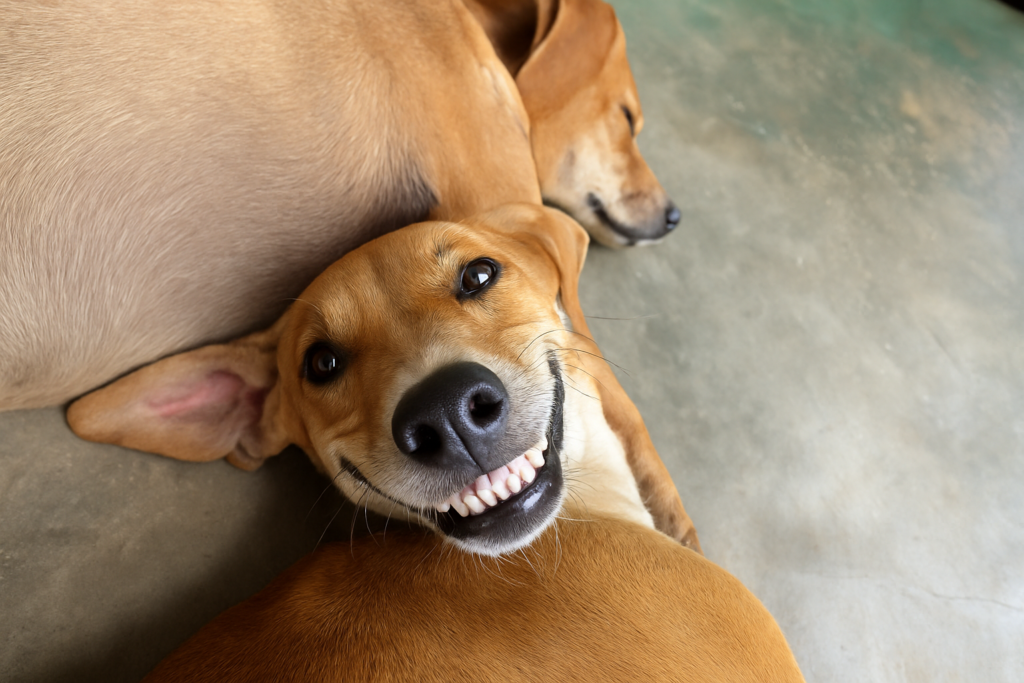
😄 Relaxed & Happy Body Language
A calm, content dog looks soft and loose throughout the body.
Signs include:
- Wagging tail (loose, wide, or low sweeps)
- Relaxed ears (natural position, not stiff)
- Soft eyes, blinking normally
- Loose body, balanced posture
- Open mouth, relaxed facial muscles
What it means:
Your dog is comfortable, happy, and ready to interact.
🐾 Playful Body Language
Play looks dramatic, silly, and exaggerated — but it’s friendly!
Common signs:
- Play bow (front legs down, rear up)
- Bouncy movements
- Tail wagging broadly
- Open-mouth “play face”
- Gentle mouthing or pawing
What it means:
Your dog wants to interact, chase, wrestle, or engage with you or another dog.
Good socialization helps your dog feel safer in new places and around new people.
😬 Stressed or Uncomfortable Body Language
Dogs show stress long before they react. Watch for subtle signals.
Stress signs include:
- Lip licking (when not eating)
- Yawning (not tired)
- Turning head away
- Stiff posture
- Tail low or tucked
- Ears pinned back
- Whale eye (showing white of the eye)
What it means:
Your dog needs space, reassurance, or a break from the situation.
😟 Fearful or Anxious Body Language
Fear often appears stronger than mild stress and can escalate if ignored.
Signs include:
- Trembling or shaking
- Tail tightly tucked
- Crouched body
- Backing away
- Avoiding eye contact
- Hiding behind you
What it means:
Your dog feels unsafe and needs distance. Never force interaction.
If you often see these fearful or anxious signals, your dog may be struggling with being left alone.
🐕 Alert & Curious Body Language
A dog noticing something interesting will shift into “investigation mode.”
Signs include:
- Ears forward
- Tail level (not stiff or wagging fast)
- Closed mouth
- Focused stare
- Slight body lean forward
What it means:
Your dog is gathering information — not yet excited or worried.
⚠️ Warning or Agitated Body Language
These signs indicate a dog may bite if pushed further.
Red-flag signals:
- Growling
- Stiff, frozen body
- Hard stare
- Lips curled back
- Tail high and stiff
- Raised hackles (hair along spine)
What it means:
Your dog is asking for space. Never punish warning signals — they prevent bites.
If your dog is showing these warning signals, it’s important to step back and work on calmer greetings and better manners.
🧠 Bonus: Calming Signals Dogs Use
Dogs often use subtle behaviors to calm themselves or others.
These include:
- Slow blinking
- Sniffing the ground suddenly
- Turning the head sideways
- Shaking off (like they’re wet)
- Walking in a curve, not straight
These behaviors help dogs avoid conflict and reset their emotions.
❤️ Final Thoughts
Learning your dog’s body language turns guesswork into clear understanding.
When you know what your dog is telling you, you can respond calmly, prevent problems, and meet their emotional needs with confidence.
With patience and observation, you’ll start noticing these signals everywhere — and your relationship will grow deeper, stronger, and more connected. 🐾
The Dog Care Hub Editorial Team
The Dog Care Hub Editorial Team is a group of passionate dog lovers focused on making everyday dog care simple and beginner-friendly. We combine real-life experience with information from trusted veterinary sources to create clear, gentle guidance for new and experienced dog owners. Every article is reviewed for accuracy, safety, and ease of understanding so you can feel more confident caring for your dog.
🎁 Want the Calm Start Starter Pack (Free PDF)?
Get the free download in one click.
👉 Want to support the site? Shop our Dog Care Hub merch (hoodies, mugs, and more).